English
 Arabic
 Chinese (Simplified)
 Dutch
Dutch French
 German
 Italian
 Japanese
 Korean
 Portuguese
 Russian
 Spanish
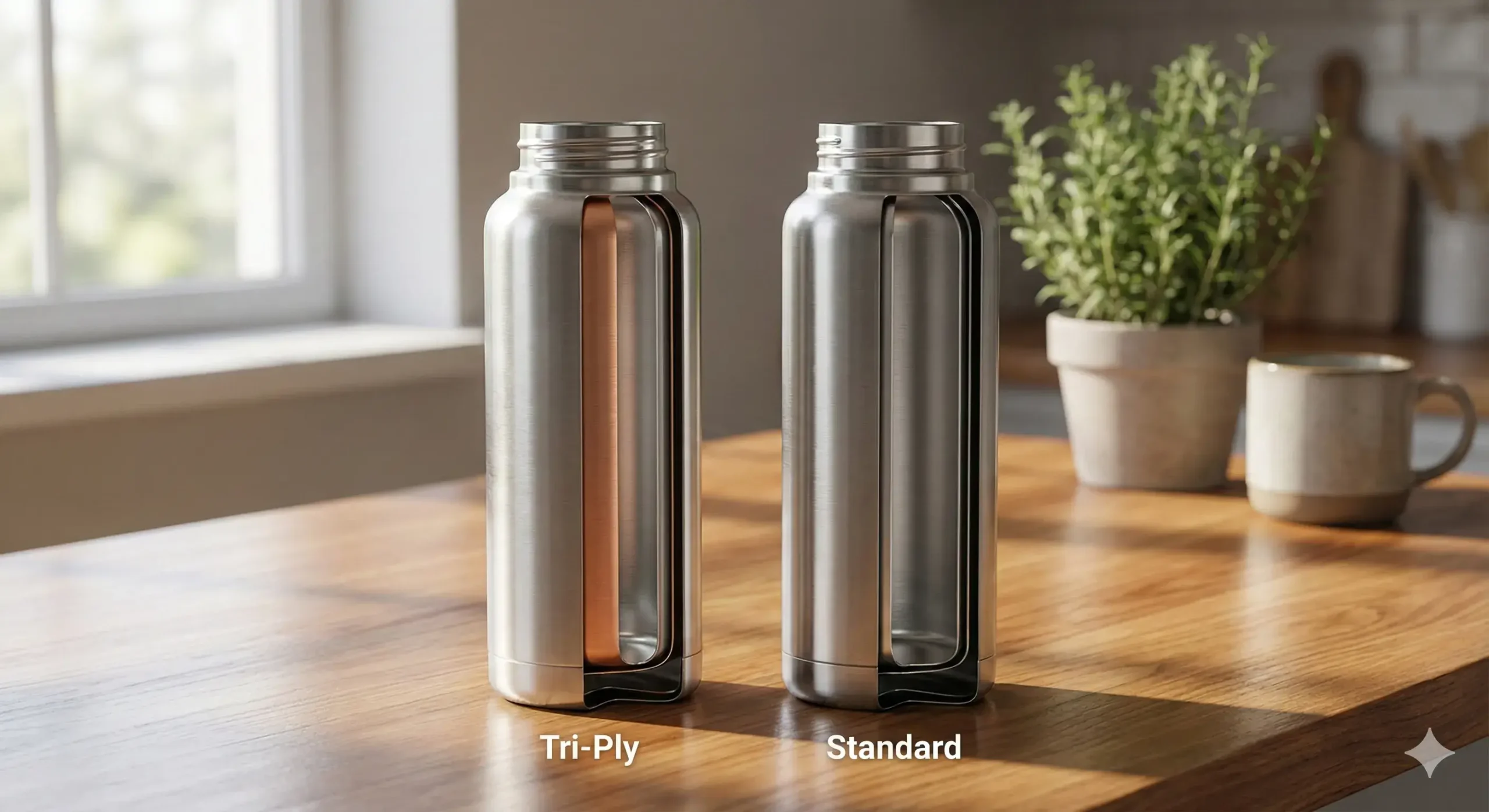
Choosing the right water bottle today feels harder than it should—especially when new terms like "tri-ply" keep showing up.
A tri-ply water bottle uses three bonded layers—stainless steel, aluminum or copper core, and stainless steel again—for superior insulation, while standard stainless steel bottles use single or double walls with simpler insulation.
Before you grab the latest bottle trending online, let's break down what really matters—and what might just be marketing.
What Exactly Is a Tri-Ply Water Bottle, and How Does It Stack Up Against Standard Stainless Steel?
The name sounds technical, but what does "tri-ply" really mean when it comes to bottles—and how is it different from the ones we've used for years?
Tri-ply bottles combine two layers of stainless steel with a middle layer of aluminum or copper, while standard bottles are usually single or double-walled steel.
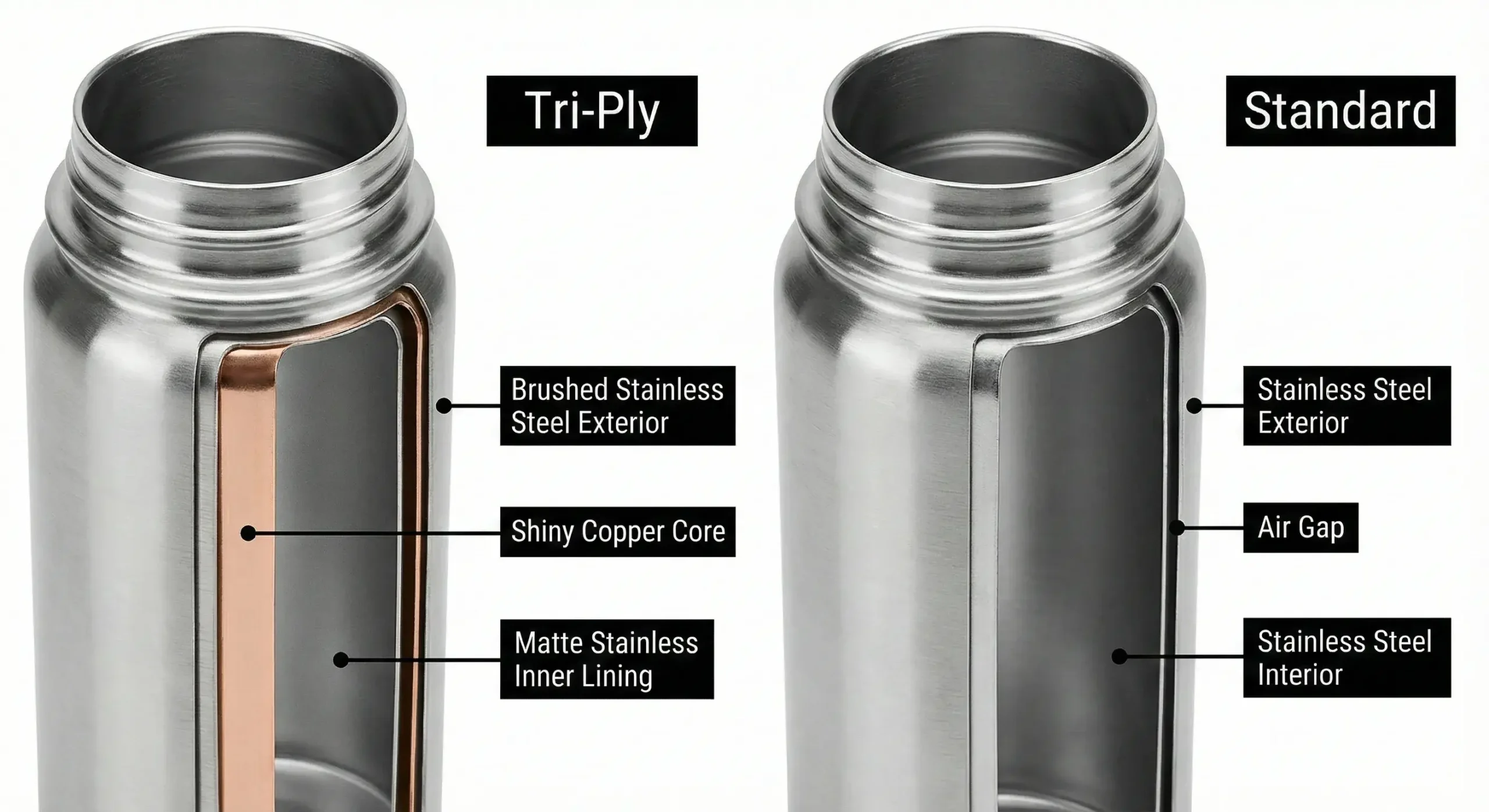
How They're Built Differently
| Feature | Tri-Ply | Standard Stainless Steel |
|---|---|---|
| Layers | 3 (SS + core + SS) | 1 or 2 (SS or SS + air gap) |
| Insulation Type | Metal core + vacuum | Air gap (double-wall) |
| Material Quality | Typically 18/8 stainless | Varies (often 18/8 or 304 SS) |
| Heat Retention | 20–50% better retention | Moderate (12–24h max) |
Many confuse tri-ply bottles with cookware. But in hydration products, the core doesn't heat the drink—it slows heat transfer. Brands like Pexpo emphasize how the metal core reduces temperature changes by up to 30%. Standard bottles use air gaps, which work but are less effective over time.
Some Redditors question whether "tri-ply" is just marketing. However, insulation tests show a measurable difference in performance.
Does Tri-Ply Offer Superior Insulation Compared to Stainless Steel Bottles?
Need your drink cold after 24 hours? Or coffee still hot by lunch? That's where tri-ply bottles shine.
Yes—tri-ply bottles hold drinks cold for up to 48 hours and hot for 24 hours, while standard stainless steel typically manages 12–24 hours.
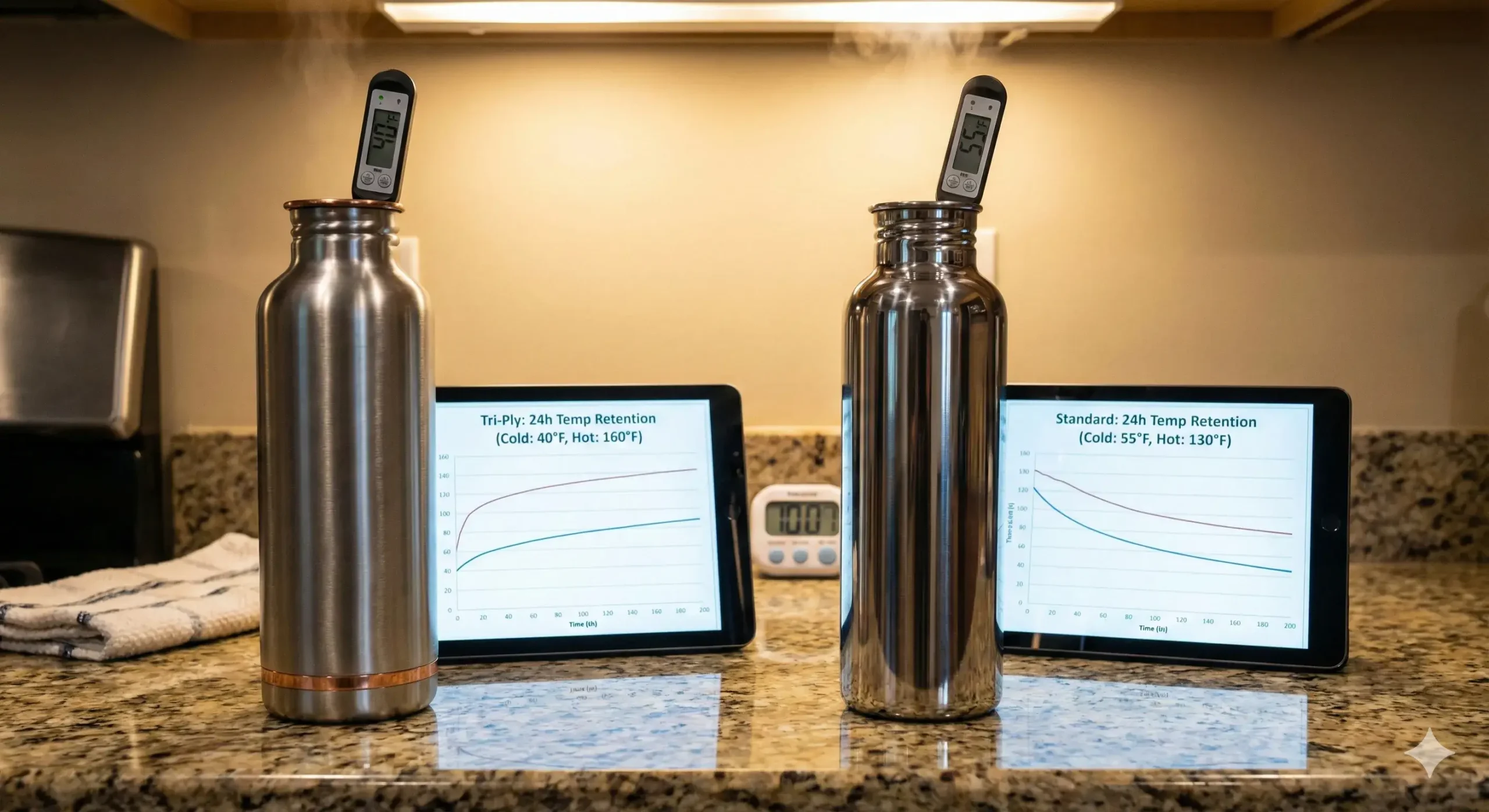
What the Tests Say
According to BottlePro's insulation test:
- Tri-ply (32oz, ice water): 40°F after 24 hours
- Double-wall stainless steel: 55°F after 24 hours
- Tri-ply (hot water): 160°F after 12 hours
- Double-wall stainless: 130°F after 12 hours
That's a 20–50% edge for tri-ply bottles.
Triple-wall construction creates a vacuum layer, and the aluminum or copper core reflects radiant heat. America's Test Kitchen praised tri-ply bottles for their "no-sweat" exteriors—great for hot weather or workouts. The key is vacuum insulation technology1, which blocks heat transfer by eliminating air molecules between layers.
But insulation isn't always necessary. If you're using a bottle for short commutes or room-temp water, standard stainless may be all you need.
Which Holds Up Better Over Time: Tri-Ply or Traditional Stainless Steel?
Everyone wants a bottle that lasts, especially when it's bouncing around in backpacks or car cup holders.
Tri-ply bottles last 5–7 years on average, compared to 3–5 years for standard stainless steel, though tri-ply may dent more easily if dropped hard.
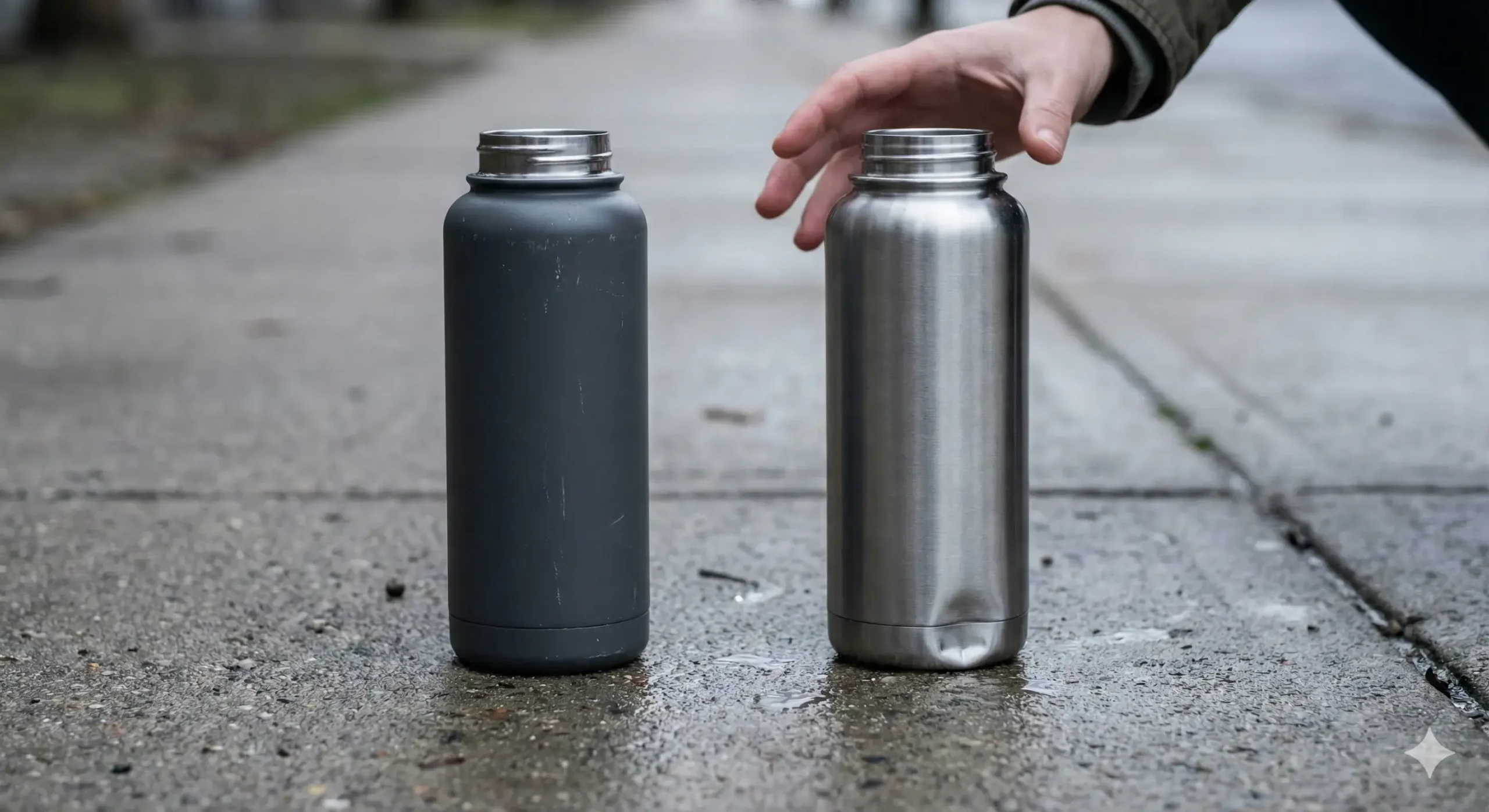
Durability Breakdown
- Tri-Ply:
- Stronger thermal performance over time
- Resistant to corrosion and rust
- May warp if aluminum core is damaged
- Stainless Steel:
- More resistant to dents on corners
- Lightweight and more portable
- May show scratches or stains faster
Users on Reddit's r/BuyItForLife2 report that tri-ply bottles survive 50+ drops with only minor dings. But thin cores in cheaper bottles may delaminate under impact. For both types, quality matters—look for 18/8 food-grade stainless steel3.
Adding a silicone sleeve is a smart way to extend either bottle's lifespan.
Is the Higher Price of Tri-Ply Water Bottles Justified Over Stainless Steel?
Let's talk dollars. Is paying 30–50% more for tri-ply worth it?
For heavy users, yes—tri-ply bottles cost more upfront ($25–45) but last longer and offer better insulation, while stainless bottles ($10–30) are ideal for budget-conscious buyers.
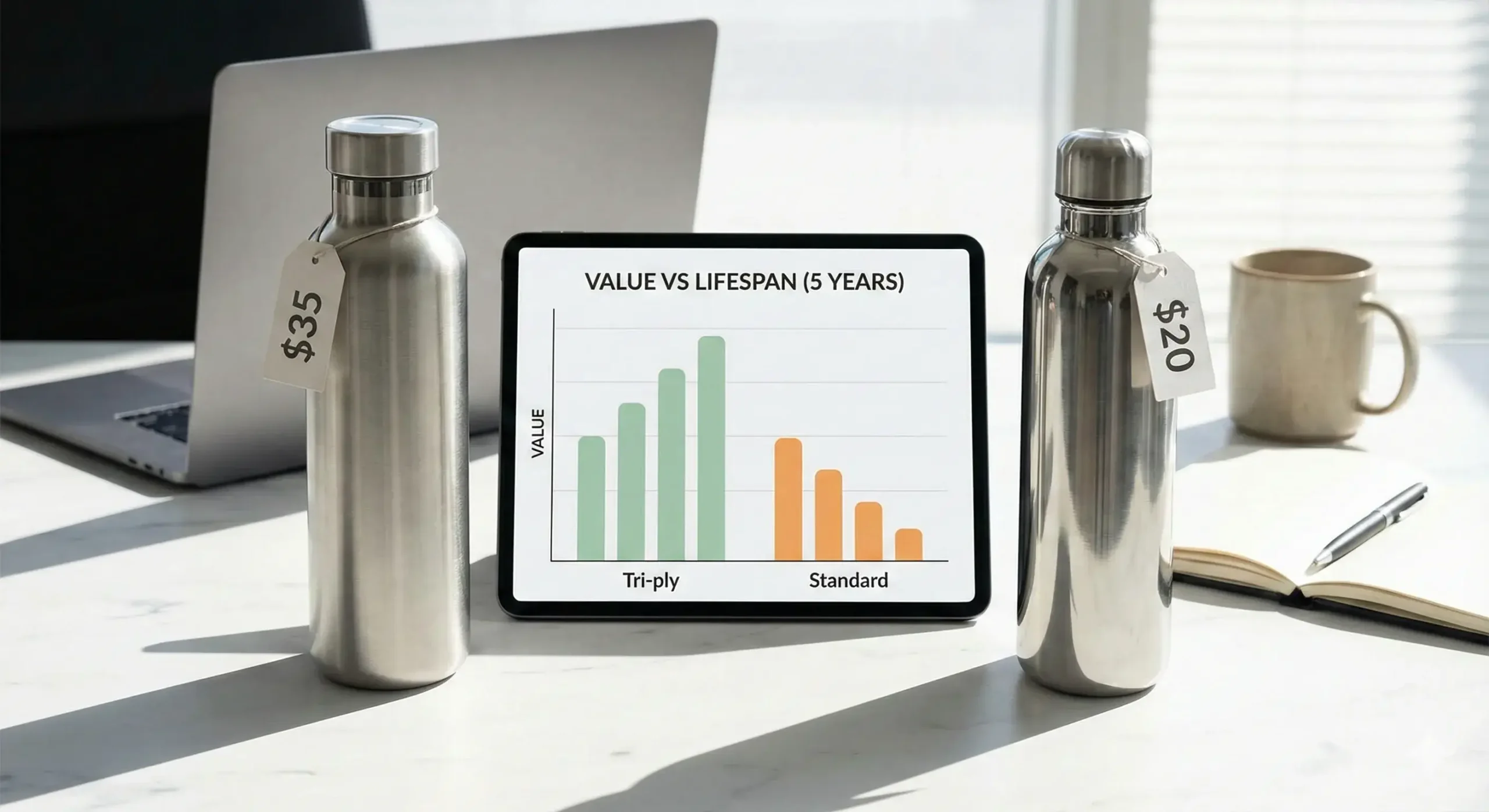
Where the Value Lies
| Use Case | Best Choice |
|---|---|
| Daily coffee or tea | Tri-ply |
| Short commutes | Stainless steel |
| Outdoor adventures | Tri-ply |
| Office hydration | Stainless steel |
| Sensitive to weight | Stainless steel |
If you drink hot or cold beverages daily, a tri-ply bottle pays for itself within a year. Plus, less need for refills or ice saves time and energy. But if you're sticking to room-temp water, standard stainless is a smarter deal.
When Would You Pick Tri-Ply Over Stainless Steel (or the Reverse)?
Not every bottle fits every lifestyle. So when should you go tri-ply—and when should you skip it?
Pick tri-ply for long insulation needs, outdoor use, or hot drinks; pick stainless for lightness, budget, and quick hydration needs.
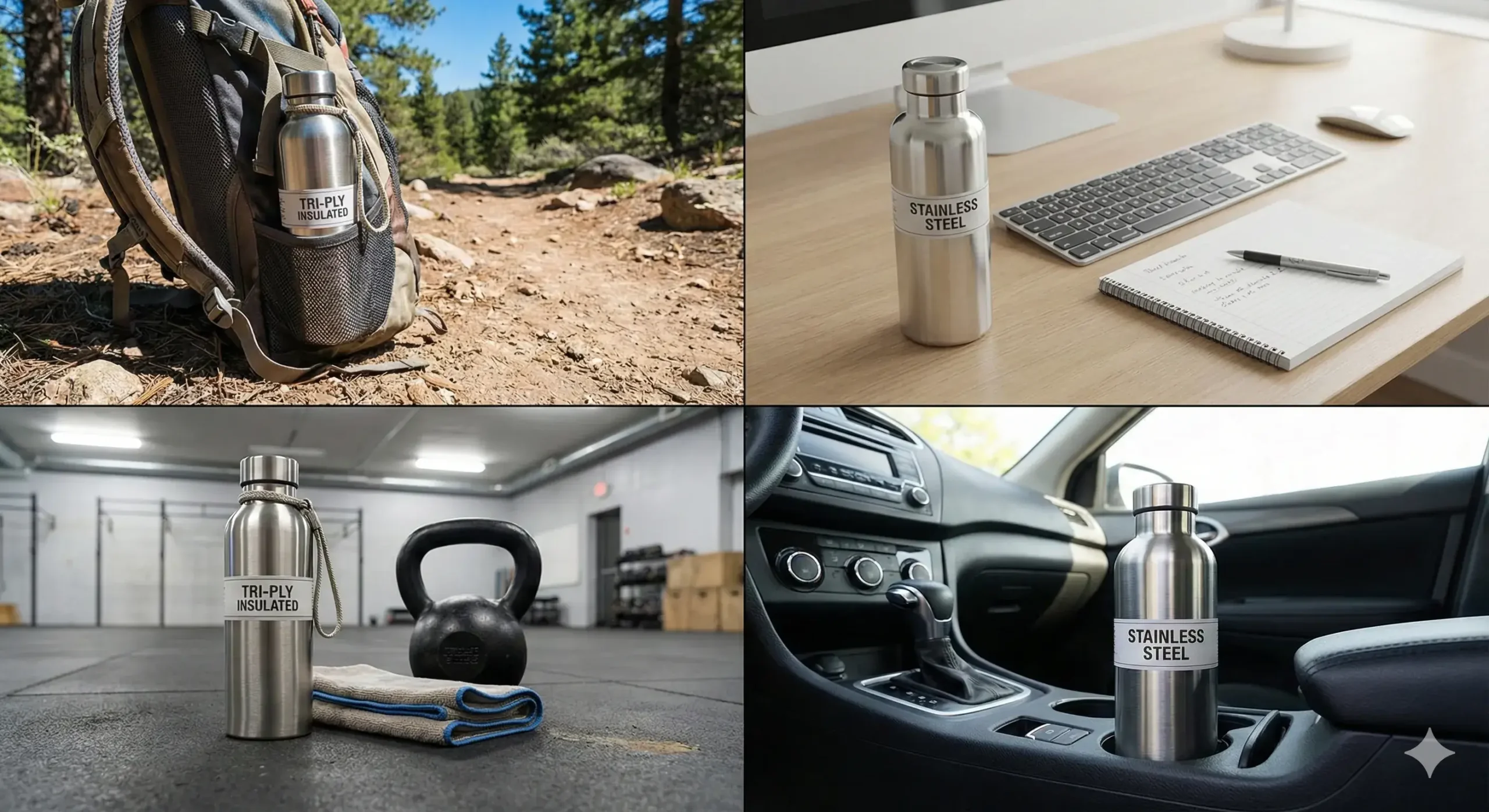
What to Consider
"I switched to tri-ply for hikes in the summer. My water stayed cold even after 10 hours in 95°F heat. But for office use, I still grab a lighter stainless bottle."
Tri-ply bottles are 15–25% heavier (0.3–0.5 lbs more for 32oz) than stainless. This can strain your wrist if you carry it all day. That's why arthritis sufferers or kids may prefer stainless.
On the other hand, tri-ply bottles offer peace of mind during travel or outdoor trips where refilling isn't easy.
How Should You Maintain Tri-Ply and Stainless Steel Bottles for Peak Performance?
Insulation means nothing if your bottle smells or leaks. Proper care extends the life of both types.
Both should be hand-washed with mild soap and dried upright; tri-ply benefits from vinegar soaks for deeper cleaning4.
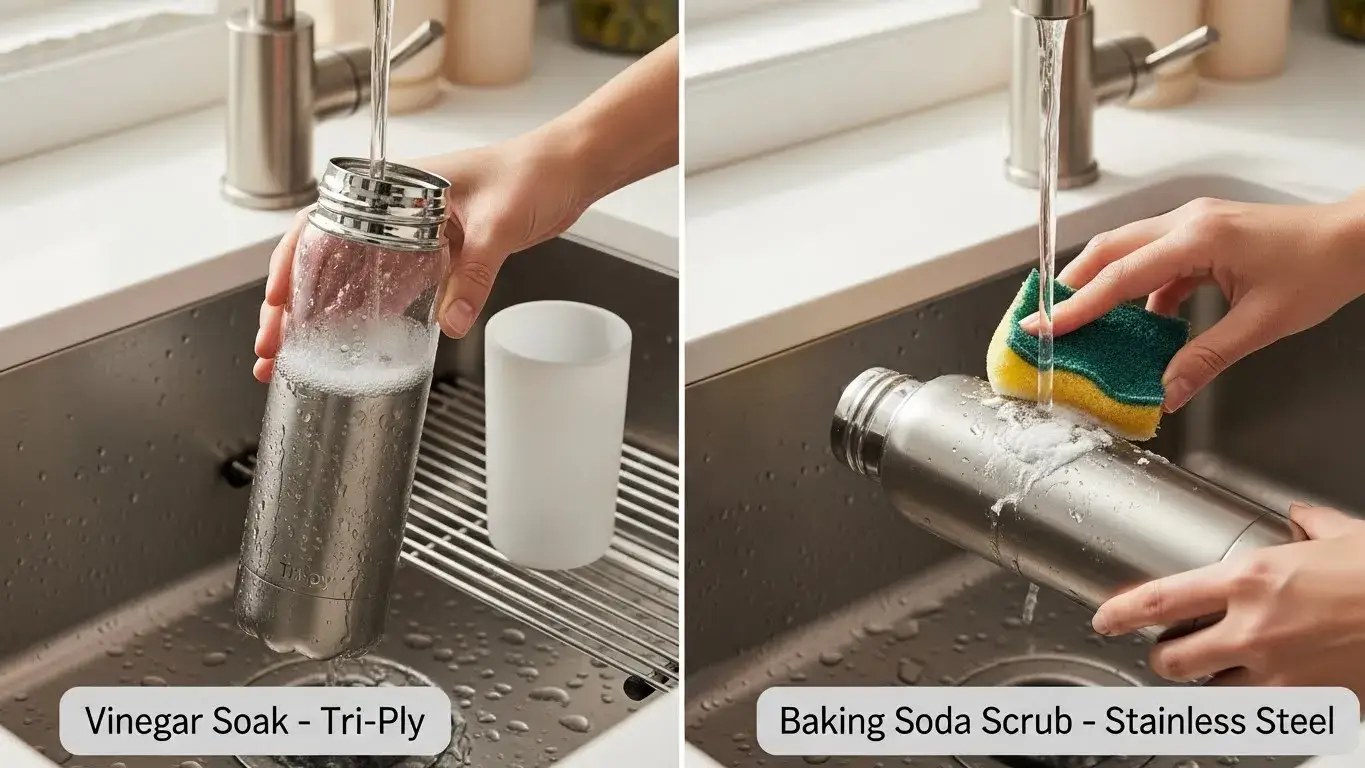
Cleaning Tips by Bottle Type
For Tri-Ply Bottles
- Use warm water and mild detergent
- Soak with vinegar if odor or stains develop
- Avoid dishwashers to protect the core
- Store with lid off to prevent mold
For Stainless Steel Bottles
- Use baking soda + warm water to scrub stains
- Dry fully to prevent rust at the seams
- Silicone sleeves help prevent exterior scratches
AboutWater suggests a monthly deep clean to prevent mold and mineral buildup. Avoid metal brushes or harsh abrasives to preserve the inner lining.
What Are Real Users and Experts Saying About Tri-Ply vs. Stainless Steel Water Bottles?
What are people really saying—on Reddit, review sites, and expert blogs?
Users praise tri-ply bottles for retaining temperature all day; common complaints include extra weight and bulk. Stainless steel wins for daily portability.
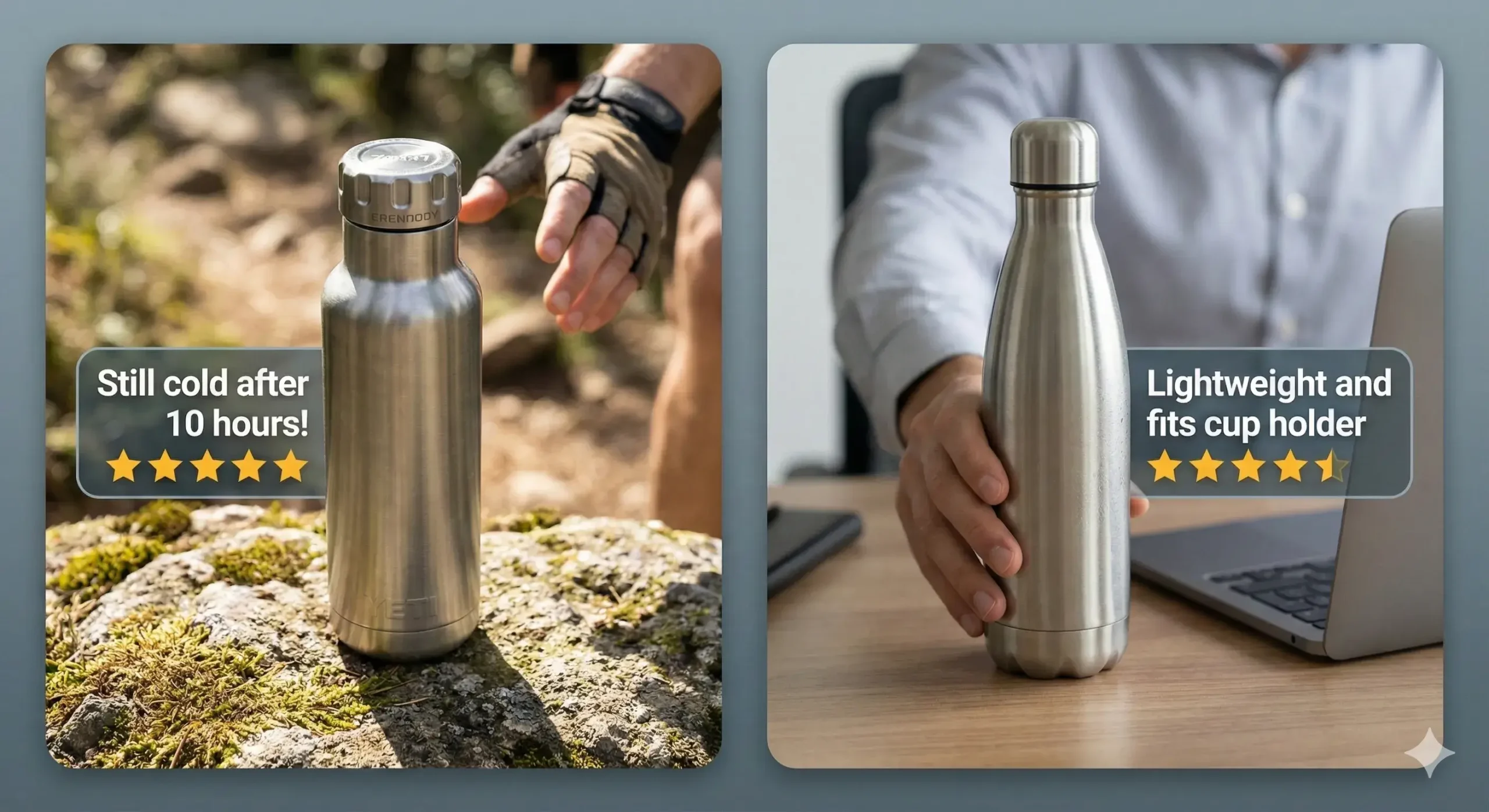
User Comments Snapshot
- "My coffee stayed hot for 6 hours in my tri-ply—finally!"
- "Dropped it on concrete. Tri-ply held up better than my old bottle."
- "Tri-ply's great, but it's heavy in my gym bag."
- "Standard stainless fits in all my cup holders. That's a win."
Experts from America's Test Kitchen favor tri-ply bottles for outdoor use and long hours. But they note that a well-made double-wall stainless bottle still offers solid performance if it's 18/8 grade and vacuum-sealed. Testing confirms that premium insulated bottles can achieve 24 hours of cold and 12 hours of heat retention5.
Conclusion
Tri-ply bottles excel in insulation and durability, while stainless ones are lightweight and budget-friendly—choose based on your real needs.
FAQs
Q: Is tri-ply the same as triple-wall?
A: Nearly. Tri-ply often means metal core between two stainless layers; triple-wall may use air or foam in the middle.
Q: Is aluminum in tri-ply bottles safe?
A: Yes, the aluminum core is sealed and does not touch liquids—safe per FDA standards6.
Q: Do tri-ply bottles sweat or leak?
A: No—most are vacuum-sealed with threaded lids, which prevent sweating and leaks.
Q: Which is more eco-friendly?
A: Tri-ply has higher production emissions but a longer lifespan, which balances its footprint over time.
Q: Can I put acidic drinks in a tri-ply bottle?
A: Yes, both types use food-grade stainless steel that handles acidic drinks like lemon water or juice safely.
Q: How long do stainless steel water bottles last?
A: With proper care, quality stainless steel bottles can last 10 to 12 years7 before needing replacement.
-
Service Ideas explains how vacuum insulation works by eliminating air molecules between layers, blocking heat transfer through conduction, convection, and radiation to maintain beverage temperatures for hours. ↩
-
Klarna partnered with Reddit's r/BuyItForLife community of over 1.4 million members to compile the most recommended durable products, including water bottles praised for long-lasting quality. ↩
-
Ecoway Houseware's comprehensive guide details why 18/8 (304) stainless steel is FDA-approved for food contact, offering excellent corrosion resistance and non-reactive properties for safe hydration. ↩
-
Elephant Box provides detailed cleaning instructions using vinegar and baking soda to naturally disinfect stainless steel bottles, removing mold, mineral buildup, and lingering odors. ↩
-
GearJunkie's extensive testing of 40+ insulated water bottles confirms that premium double-wall vacuum insulation maintains cold temperatures for 24 hours and hot for 12 hours. ↩
-
The FDA regulates materials that come into contact with food and beverages, establishing safety standards for food-grade metals and ensuring sealed aluminum cores don't contact liquids. ↩
-
Hydro Cell explains that stainless steel water bottles can last 10-12 years on average due to their durability, non-corrosive properties, and stain resistance when properly maintained. ↩