English
 Arabic
 Chinese (Simplified)
 Dutch
Dutch French
 German
 Italian
 Japanese
 Korean
 Portuguese
 Russian
 Spanish
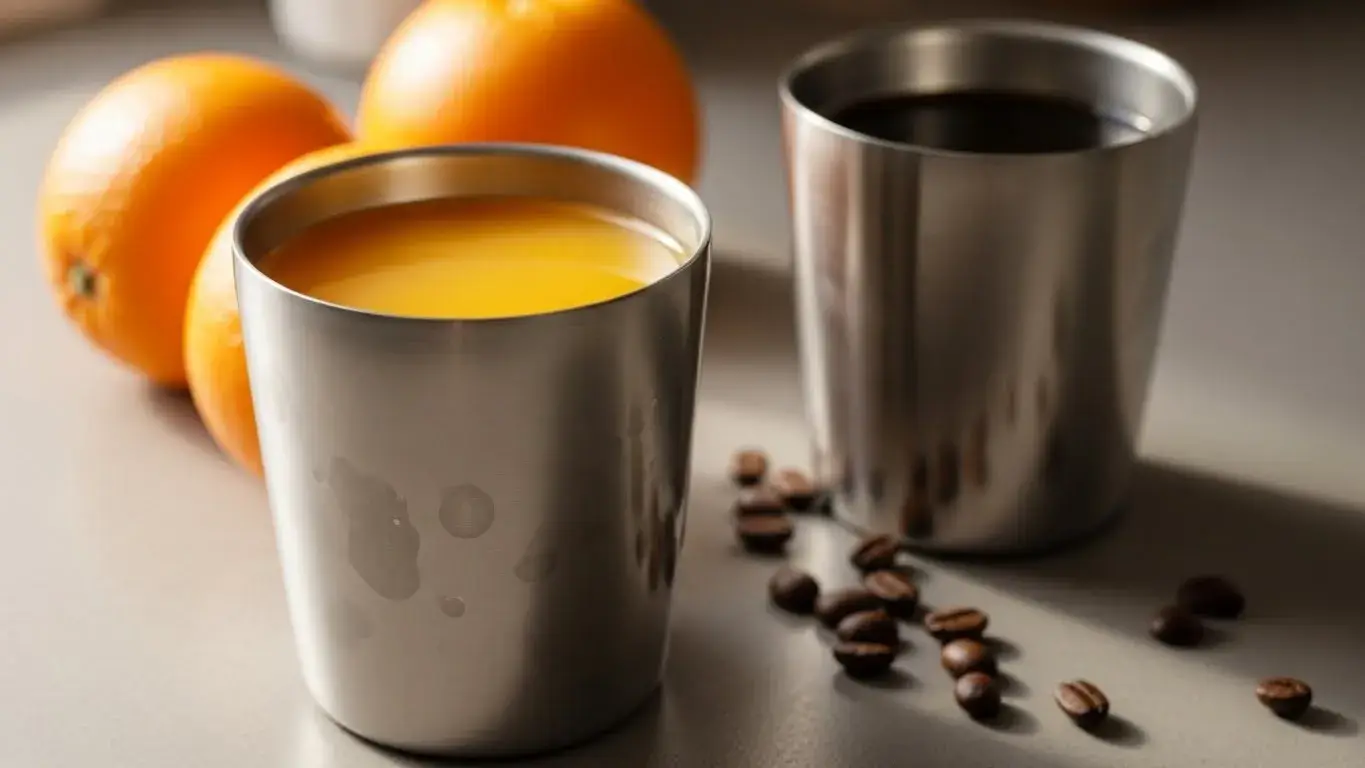
Storing acidic drinks in stainless steel may seem harmless—but can it actually damage your cups or affect your health?
Acidic drinks like juice and coffee can weaken stainless steel's protective layer over time, increasing corrosion and metal leaching risks.
Find out which beverages are safe, what grades of steel work best, and how to protect your drinkware from damage.
Understanding Stainless Steel and Its Corrosion Resistance?
Even stainless steel can corrode under the wrong conditions. How does it stay protected?
Stainless steel forms a chromium oxide layer1 that prevents rust, but strong acids or damage can break this layer down.
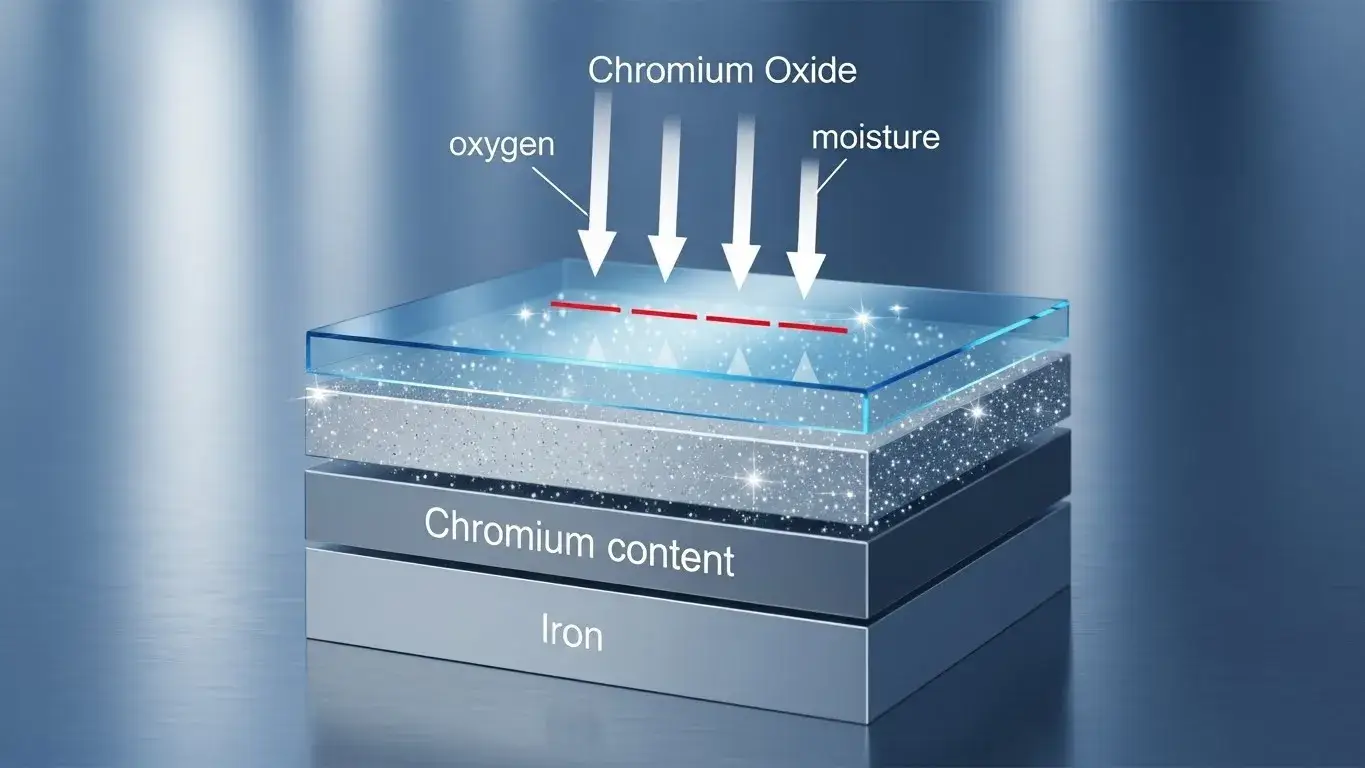
How the Protective Layer Works
Stainless steel contains at least 12% chromium2. This chromium reacts with oxygen to form a thin, invisible layer of chromium oxide. This layer keeps air and moisture from reaching the iron underneath. But strong acids, chlorides, or scratches can destroy it.
This is why corrosion doesn't just depend on the steel—it depends on what's in contact with it and for how long.
How Do Acidic Beverages Interact with Stainless Steel?
People often leave juice, tea, or coffee in cups without knowing the risks.
Acidic drinks like juice (pH 2.5–43) can wear down stainless steel's protective layer, while tea and coffee are less corrosive.
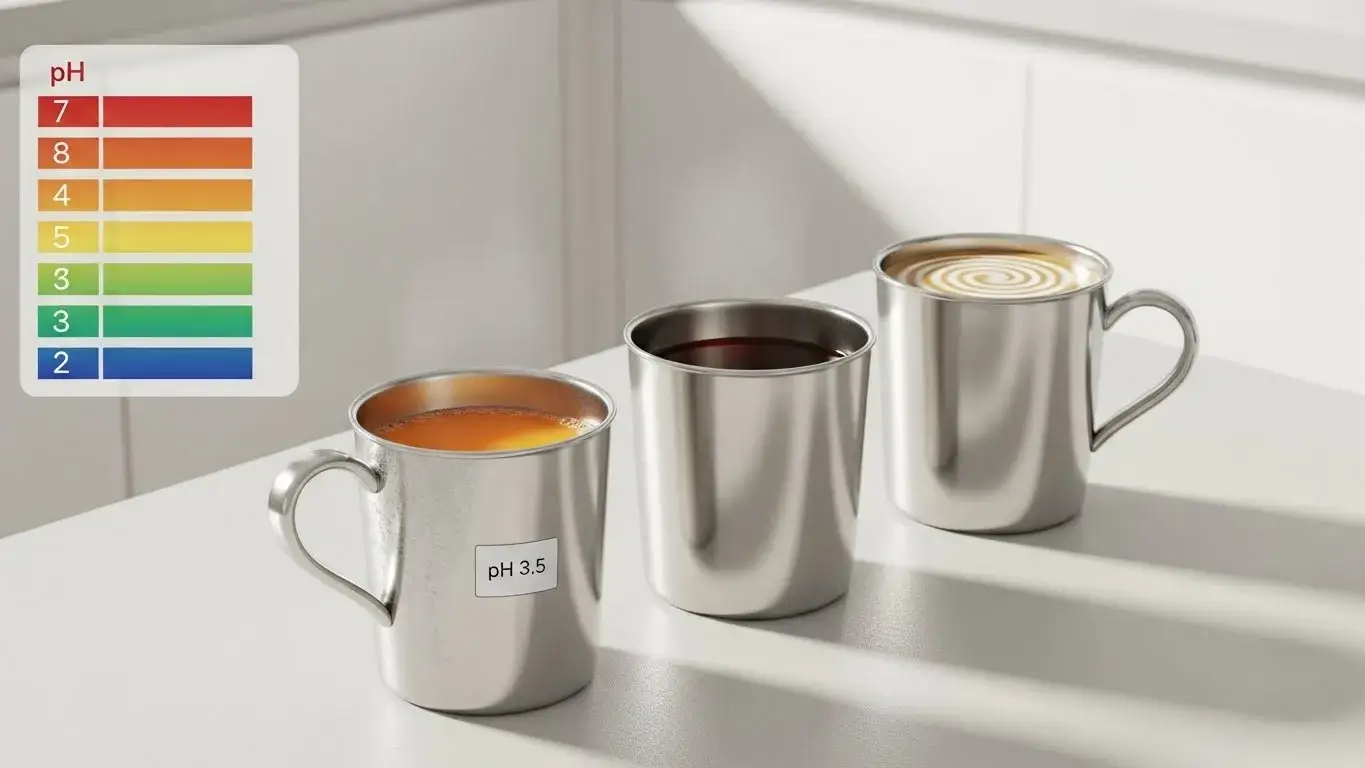
pH and Its Effect
Acidic beverages reduce the stability of the chromium oxide layer. The lower the pH, the more damage can occur, especially if the beverage sits in the cup for a long time. Juice is the most aggressive. Coffee is slightly acidic. Tea is close to neutral.
| Beverage | pH Range | Corrosiveness | Notes on Leaching |
|---|---|---|---|
| Juice | 2.5–4.0 | Moderate–High | Prolonged contact weakens surface |
| Tea | 5.0–7.0 | Low | Minimal impact under normal use |
| Coffee | 4.5–6.0 | Low–Moderate | Brief use safe; clean after use |
Corrosion Risks from Juice, Tea, and Coffee: What Does Science Say?
Can real-world use cause metal leaching or rust?
Juice can cause visible corrosion and metal leaching, while tea and coffee are generally safe with regular cleaning.
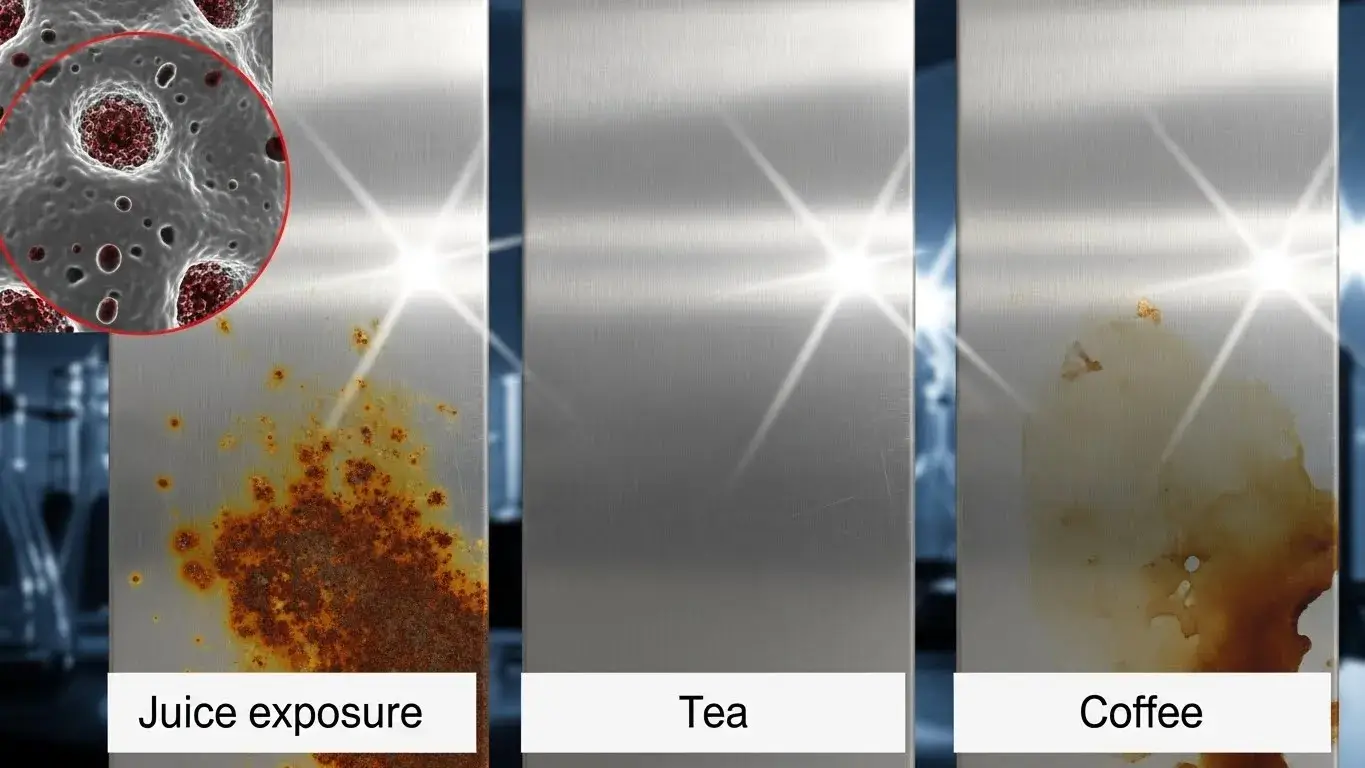
What the Research Shows
Scientific studies confirm that acidic environments—especially fruit juice—can degrade the passive layer of stainless steel. This can lead to:
- Surface corrosion
- Metal migration4 (nickel, chromium)
- Taste changes in beverages
Coffee and tea are far less corrosive. Discoloration from tea is often just staining, not rust. The key factor is exposure time and proper cleaning.
Juice vs. Tea vs. Coffee: Which Is More Corrosive?
Do all acidic drinks have the same effect on stainless steel?
Juice is the most corrosive, followed by coffee. Tea poses the least corrosion risk to stainless steel cups.
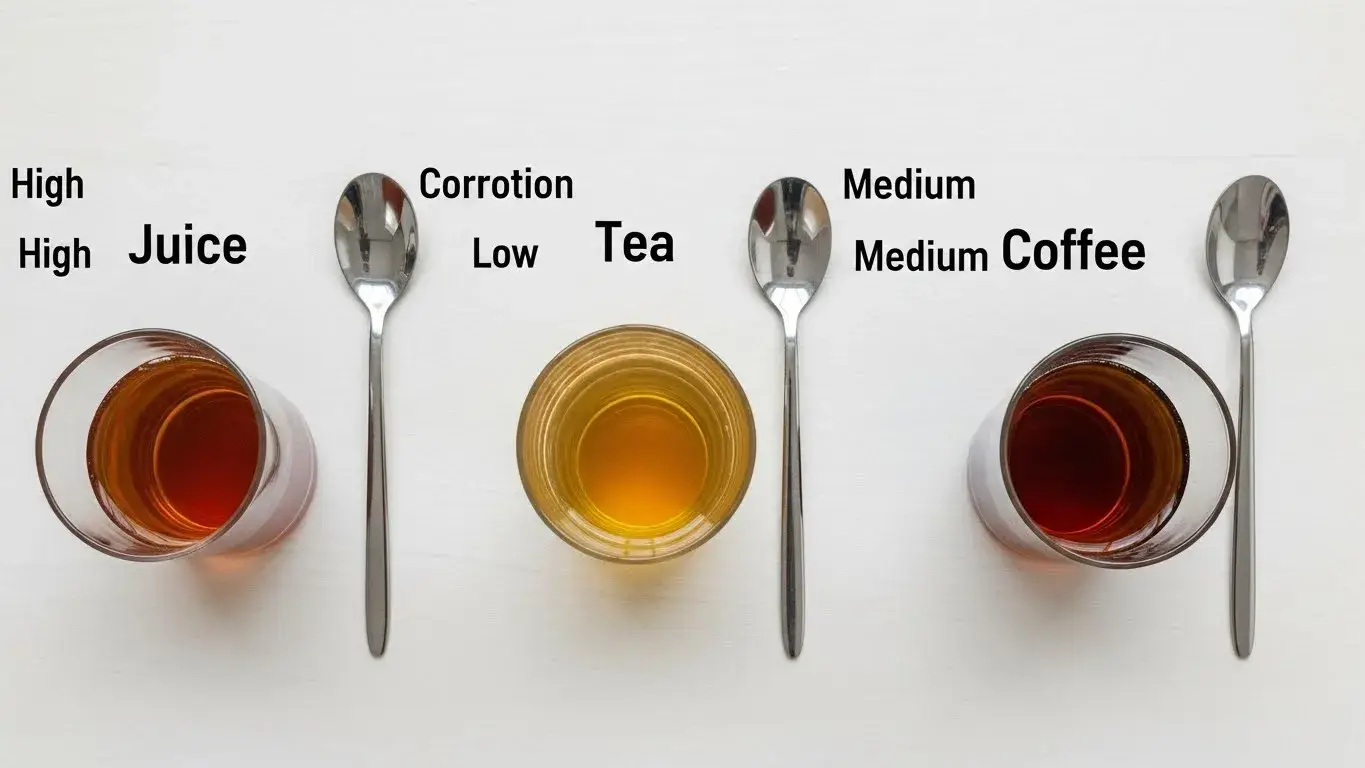
Beverage Comparison Table
| Beverage | pH Range | Corrosiveness | Notes |
|---|---|---|---|
| Juice | 2.5–4.0 | Moderate–High | Long-term contact degrades the surface |
| Tea | 5.0–7.0 | Low | Discoloration is usually harmless staining |
| Coffee | 4.5–6.0 | Low–Moderate | Clean soon after drinking |
Juice breaks down the protective chromium oxide layer faster than tea or coffee. Coffee's acids are weaker, but still worth watching if the cup is not rinsed.
Are There Health Risks from Metal Leaching in Stainless Steel Cups?
Can drinking from stainless steel harm your health?
Long-term exposure to acids can cause small amounts of chromium and nickel to leach5 from steel, but daily use is generally safe.
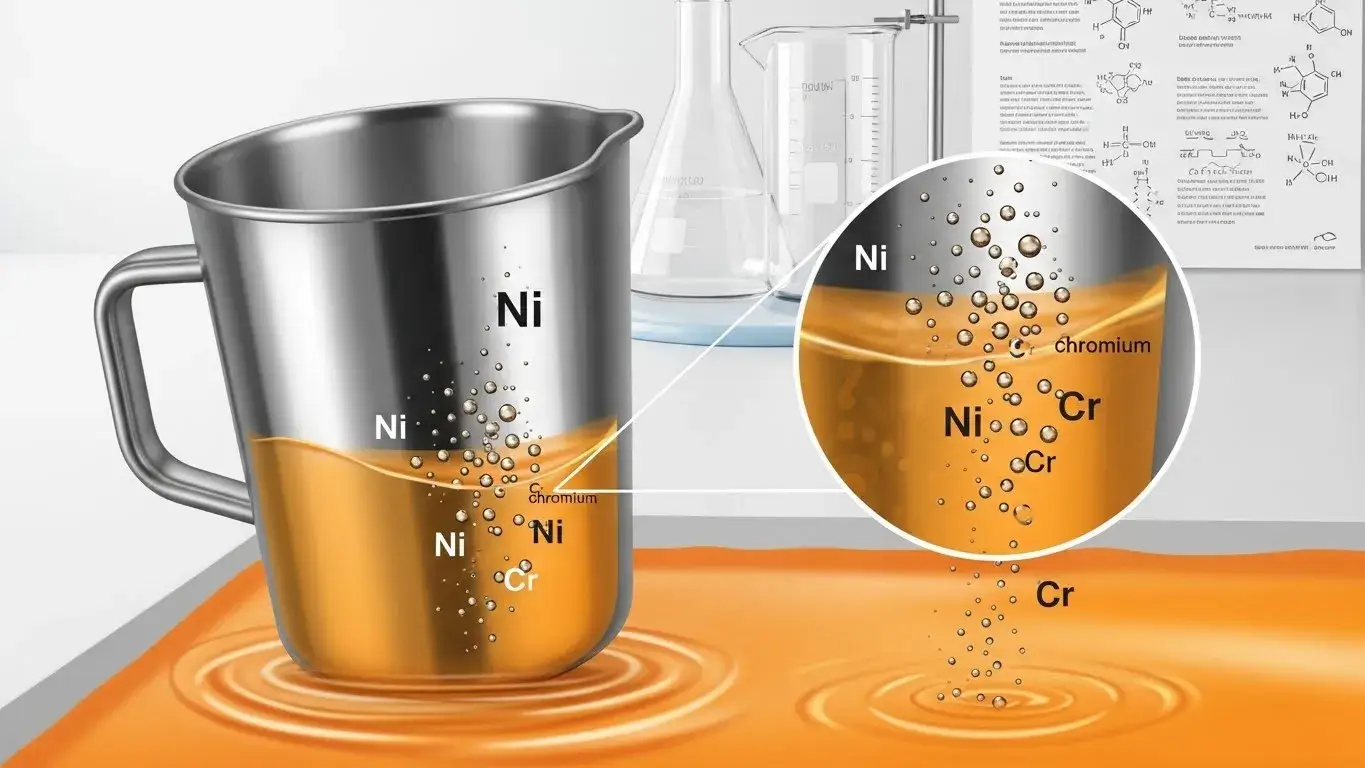
What Is Leaching?
Leaching refers to metals slowly dissolving into a liquid. With stainless steel, chromium and nickel are the most common. This happens faster when:
- The drink is highly acidic
- The exposure time is long
- The steel grade is low quality (e.g., 201)
Health Standards
Most 304-grade stainless steel meets food safety standards6, including:
Chromium migration limit: ≤ 0.4 mg/m² under high-acid test conditions
Normal use of stainless steel cups with juice or coffee won't exceed these limits—if cleaned properly and used briefly.
Best Practices to Prevent Corrosion in Stainless Steel Cups?
Want your stainless steel cups to last longer?
Clean promptly, avoid prolonged storage of acidic drinks, and use high-grade stainless steel like 304 or better stainless steel grades7 for drinkware.
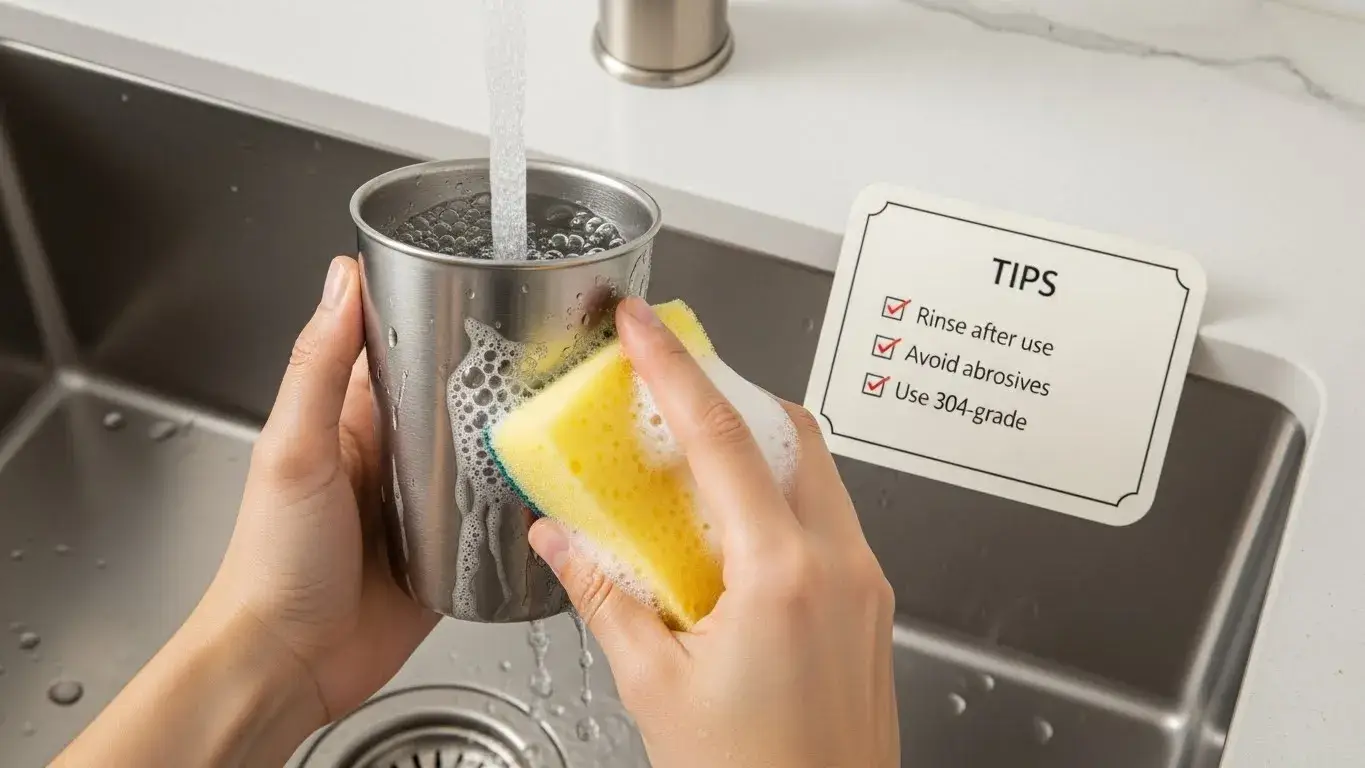
Do's and Don'ts
Do:
- Rinse cups right after use
- Wash with mild soap and soft sponges
- Use 304 or better stainless steel grades
Don't:
- Leave juice or coffee in cups overnight
- Use abrasive pads that scratch the surface
- Expose cups to extreme heat for long periods
Maintaining the protective layer helps prevent both rust and metal migration.
What Are the Industry Standards for Stainless Steel Drinkware?
Are there safety regulations for stainless steel cups?
Food-grade stainless steel8 must pass metal migration tests under harsh conditions to meet safety standards.
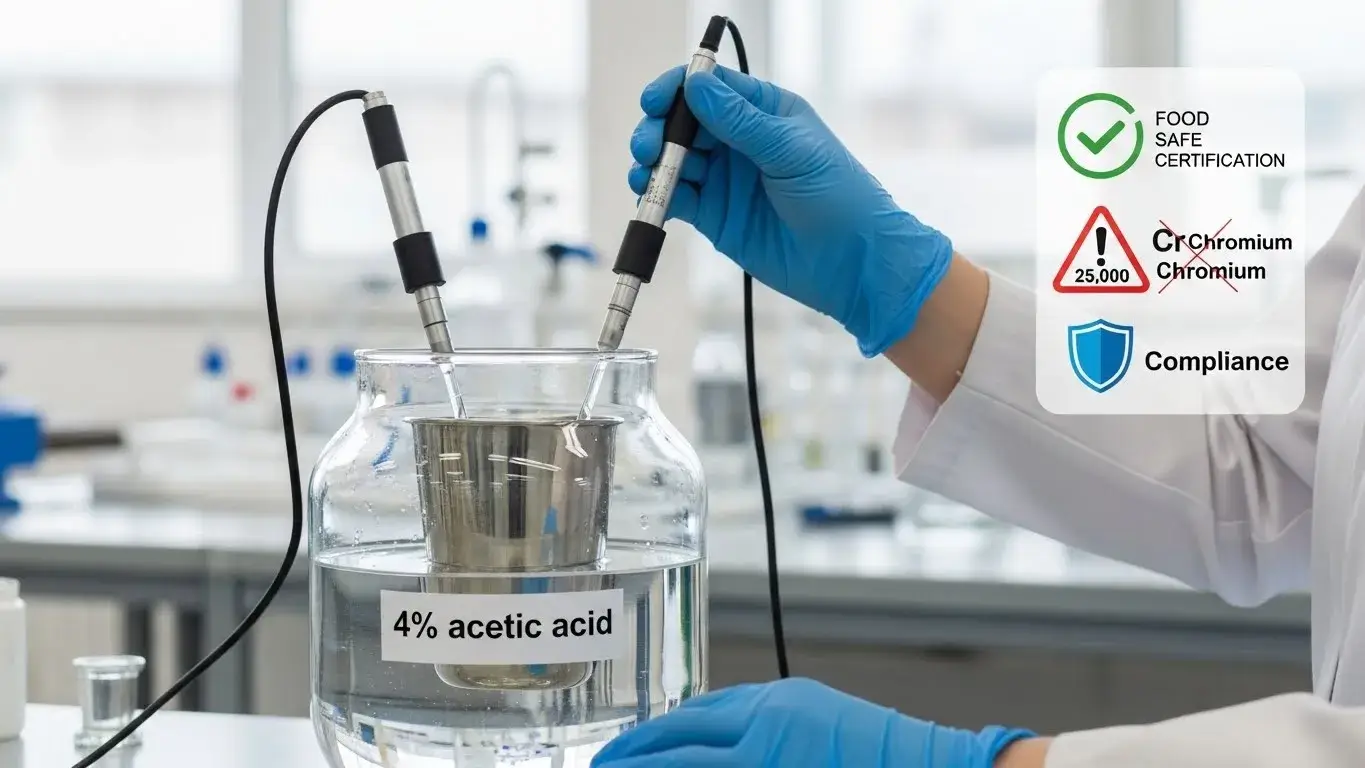
Example: Chinese Food Contact Standard
- Test method: Boil in 4% acetic acid for 30 minutes, soak for 24 hours
- Limit for chromium migration: ≤ 0.4 mg/m²
This test simulates extreme conditions. In normal usage (tea, coffee, juice), stainless steel cups fall well within the safe range.
Manufacturers like Sibottle ensure compliance by testing every product batch and using only food-safe materials in our OEM drinkware.
Conclusion
Acidic drinks can corrode stainless steel over time, but using quality materials and proper care ensures safe, long-lasting use.
FAQs
Can juice corrode a stainless steel cup?
Yes. Juice has high acidity and can degrade the protective layer, especially with long exposure.
Does tea cause corrosion in stainless steel cups?
No. Tea is close to neutral in pH and generally safe for stainless steel, though it may leave harmless stains.
Can coffee damage stainless steel drinkware?
Not usually. Coffee is mildly acidic. It's safe for short use but should be cleaned promptly.
Is it safe to store acidic drinks in stainless steel cups?
For short periods, yes. For long-term storage, it's better to use non-metal containers.
How long can acidic beverages stay in stainless steel without damage?
Ideally less than 2–3 hours. Longer storage increases the risk of surface degradation and metal leaching.
What stainless steel grades resist corrosion best?
304 and 316 are highly corrosion-resistant. Avoid lower grades like 201 for acidic liquids.
How to prevent corrosion when using stainless steel cups?
Rinse after use, avoid storing acids long-term, use 304-grade steel, and clean gently with non-abrasive tools.
Footnotes
-
Wikipedia provides a comprehensive technical overview of stainless steel's composition, explaining how chromium content of at least 10.5% forms a passive oxide film that protects against corrosion and can self-heal when exposed to oxygen. ↩
-
Industrial Metallurgists explains how stainless steel's corrosion resistance results from a thin (30-50 nanometer) oxide layer that forms due to chromium content, and how this passive layer renders the surface electrochemically passive in corrosive environments. ↩
-
This NIH/PubMed Central research study analyzed the pH of 380 commercially available beverages, documenting that fruit juices have pH ranges of 2.25–4.69, with 93% of beverages tested having a pH below 4.0, classified as erosive. ↩
-
This PubMed-indexed Oregon State University study quantified nickel and chromium leaching from stainless steel during cooking, finding that metal leaching decreases with repeated use but still contributes significant amounts to food. ↩
-
This peer-reviewed NIH study found that cooking acidic foods (tomato sauce) in stainless steel caused nickel concentrations to increase up to 26-fold and chromium up to 7-fold after 6 hours, demonstrating that prolonged acidic contact increases metal leaching. ↩
-
AZO Materials explains that both 304 and 316 stainless steels are classified as food-grade and meet regulatory standards for direct food contact, including FDA regulations and EU Framework Regulation (EC) No 1935/2004. ↩
-
MightyNest explains the different grades of stainless steel (18/8, 18/10, 304, 316), clarifying that 304 grade (18/8) is the most common food-grade stainless steel used for drinkware and food preparation. ↩
-
Atlantic Stainless details FDA compliance requirements for food-grade stainless steel, explaining that materials must be durable, corrosion-resistant, non-porous, and prevent migration of harmful substances into food. ↩