English
 Arabic
 Chinese (Simplified)
 Dutch
Dutch French
 German
 Italian
 Japanese
 Korean
 Portuguese
 Russian
 Spanish
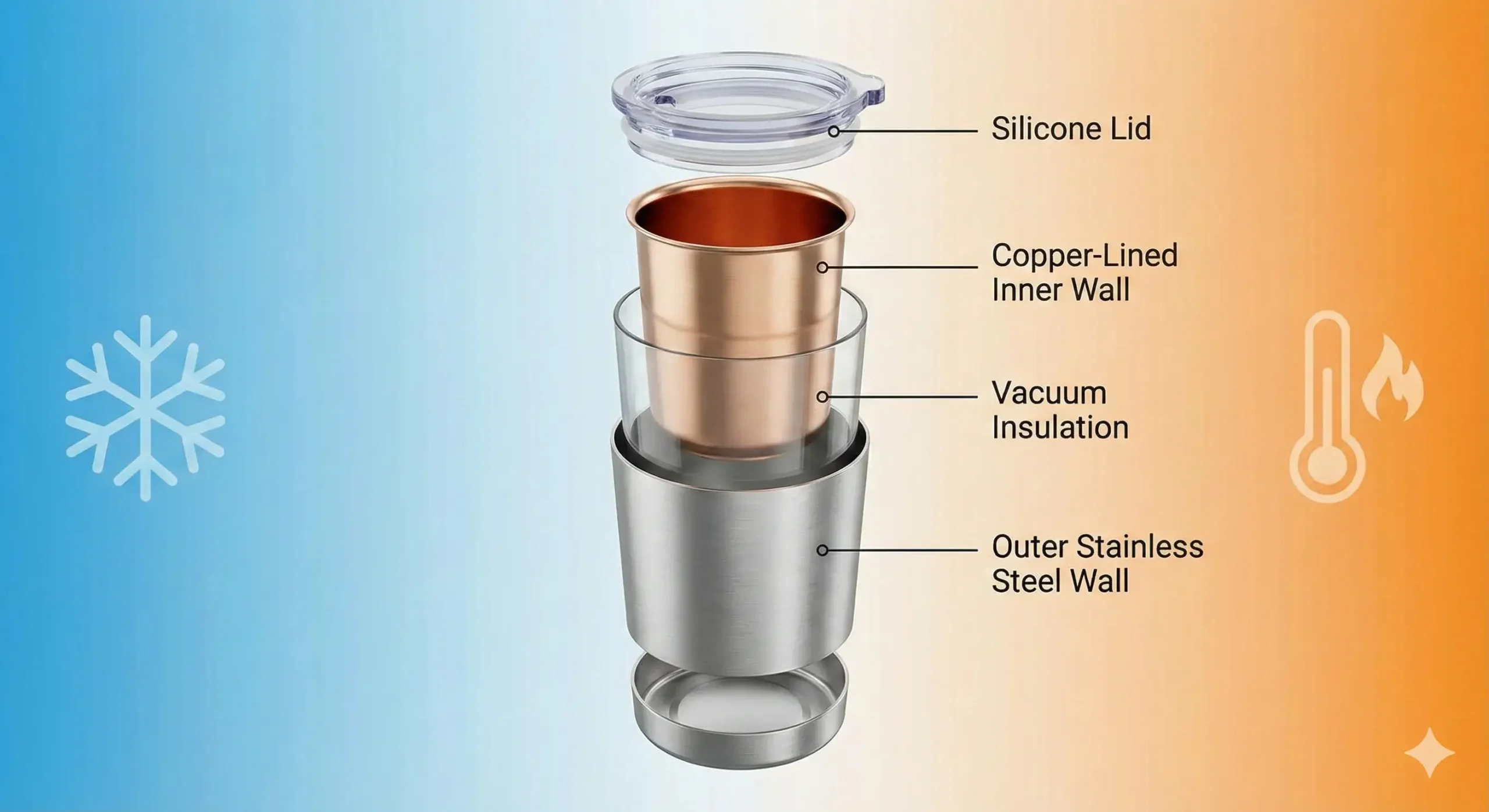
Struggling to keep drinks hot or cold for hours? You’re not alone—most cups fail because we don’t understand the science behind insulation.
Insulated cups use double-walled stainless steel with vacuum insulation to block heat transfer by conduction, convection, and radiation—keeping beverages hot or cold for extended periods.
Ever wondered why some tumblers keep your coffee hot for hours while others barely last? Let’s explore the science, debunk the myths, and learn how to choose the best.
What Makes Up the Core Design of an Insulated Cup?
Most people assume all cups are built the same—but insulation begins with engineering, not aesthetics.
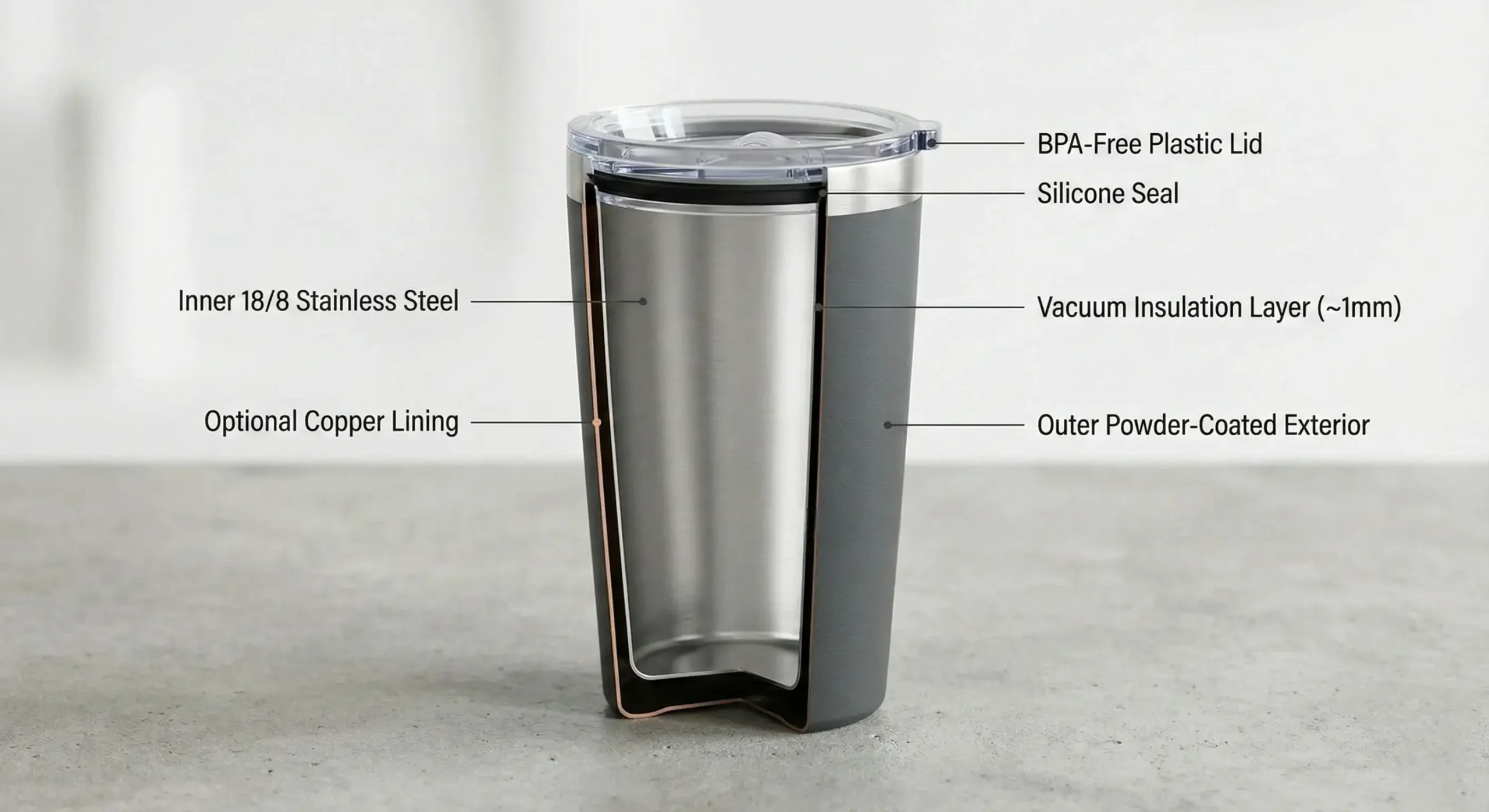
Insulated cups feature double walls, a vacuum-sealed gap, and sealed lids to reduce heat loss through air and surface contact.
Understanding the Structure
At its heart, an insulated cup has three main components:
- Inner Wall: Usually made from food-grade 18/8 stainless steel, resistant to rust and odor.
- Outer Wall: Also stainless steel, for durability and structure.
- Vacuum Layer: A thin airless space (~1mm) that acts as the main barrier to heat flow.
Lid Design
Most heat escapes through the top. That’s why:
- Lids use silicone seals to lock in heat or cold.
- Some include pressure valves or sliders to control steam release.
Add-Ons for Performance
- Copper Plating: Reflects infrared heat inside.
- Powder Coating: Improves grip and reduces scratches.
- Insulated Bases: Reduce heat loss at the bottom, an often overlooked area.
| Component | Material | Function |
|---|---|---|
| Inner Wall | 18/8 Stainless Steel | Holds liquid, food-safe |
| Outer Wall | Stainless Steel | Adds strength, prevents dents |
| Vacuum Layer | Airless Gap | Stops heat transfer |
| Lid | BPA-Free Plastic | Minimizes evaporation |
| Seal | Silicone | Locks in temperature |
How Does Vacuum Insulation Actually Block Heat Transfer?
You’ve probably heard “vacuum insulation,” but what does that really mean?
Vacuum insulation works by removing air between cup walls, stopping heat transfer by conduction and convection, while reflective linings reduce radiation.
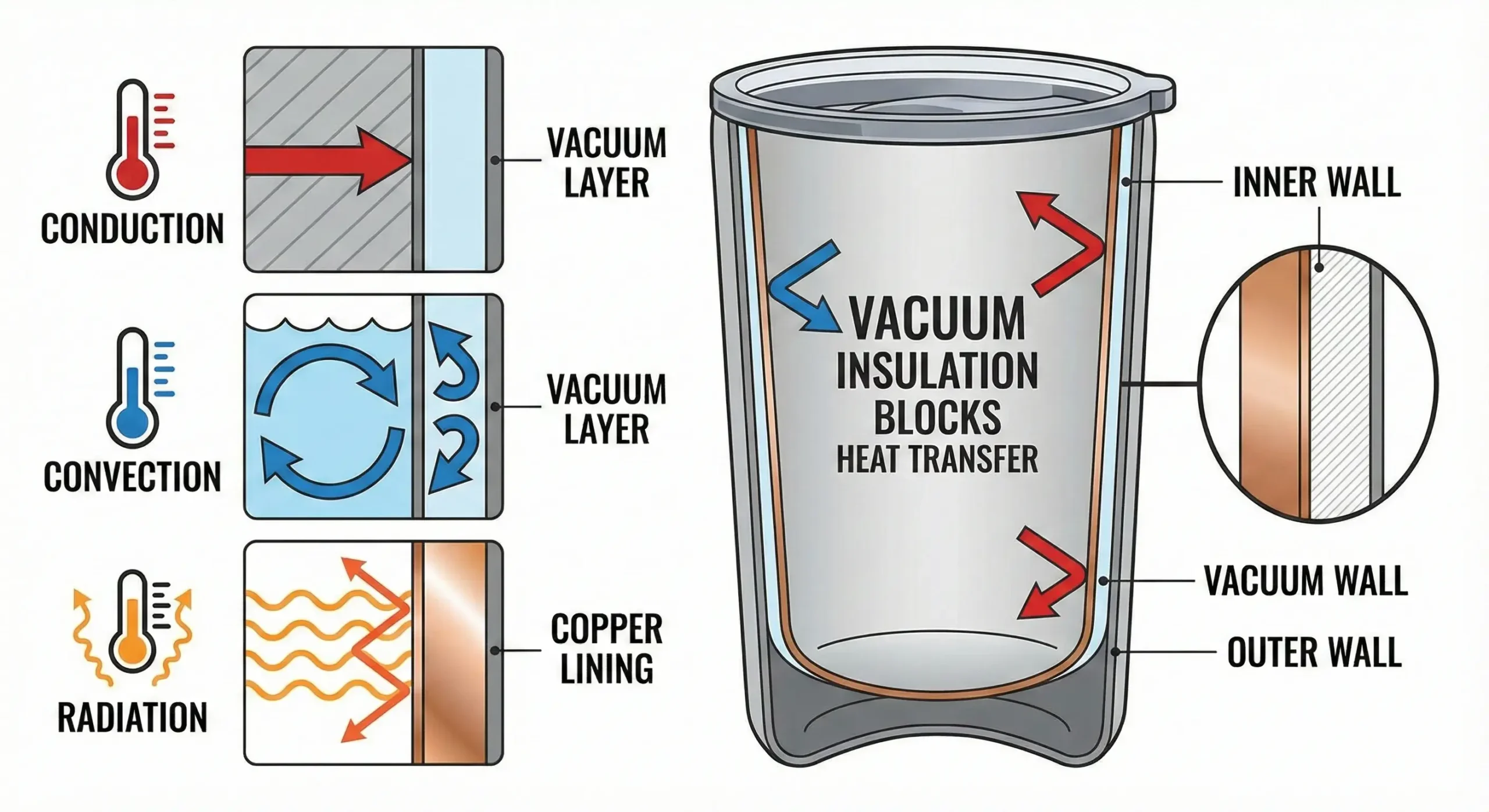
Three Ways Heat Moves—and How We Stop It
- Conduction: Heat traveling through material. Vacuum means no molecules = no transfer.
- Convection: Heat via moving air. No air, no motion, no transfer.
- Radiation: Heat from infrared energy. A shiny surface (like copper) reflects it back.
A Bit of Science
Here’s a simple formula to understand it:
Fourier's Law of Heat Conduction:
q = -k ∇T
(q = heat flux, k = thermal conductivity, ∇T = temperature gradient)
In a vacuum, k ≈ 0, so q (heat loss) is nearly zero. That’s how your coffee stays warm or your iced tea stays cool.
Material Comparison
| Material | Thermal Conductivity (W/m·K) |
|---|---|
| Vacuum | ~0 |
| Air | 0.026 |
| Stainless Steel | 16 |
| Plastic | 0.2 |
| Copper (for lining) | 385 |
The vacuum layer is the real MVP—it blocks up to 90% of heat loss compared to traditional mugs.
Why Do Some Insulated Cups Outperform Others in Real-World Tests?
Not all vacuum cups are created equal. The science may be similar, but the execution differs.
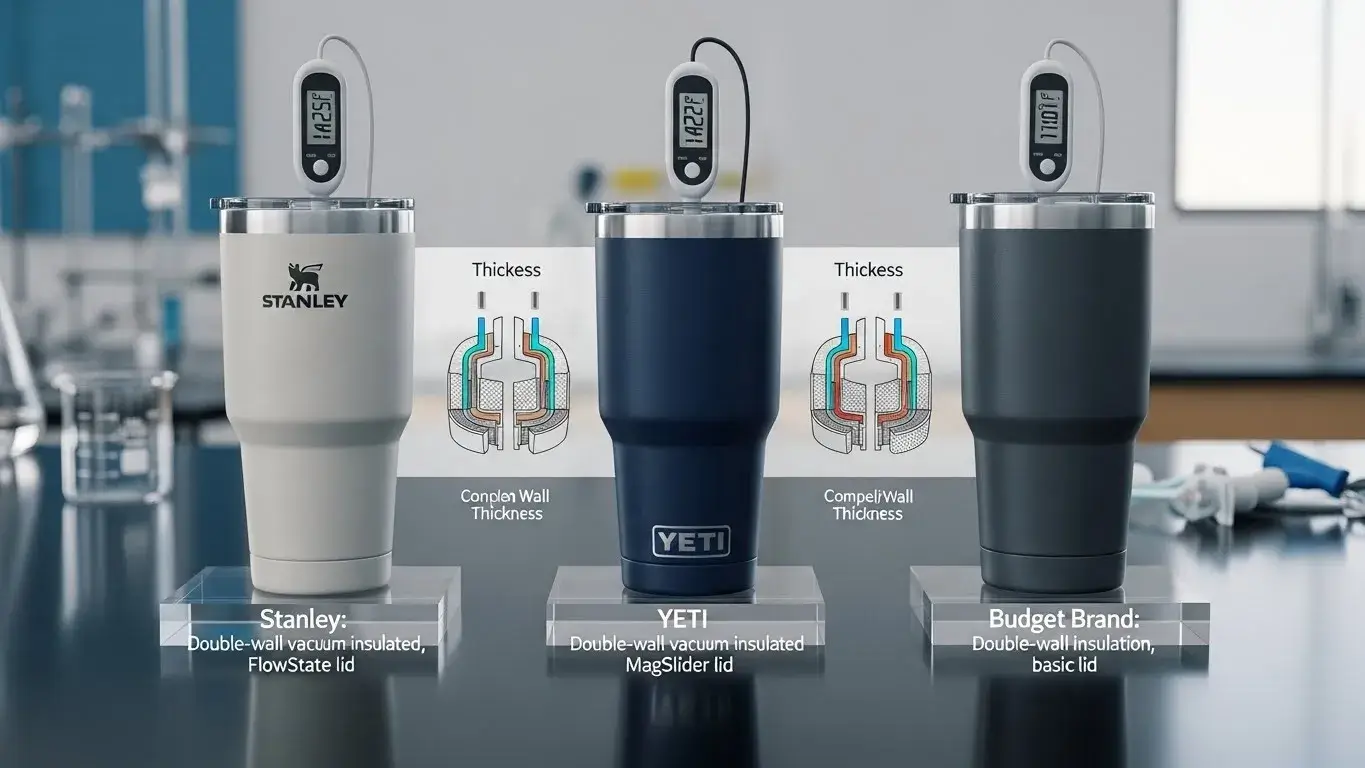
Performance depends on wall thickness, seal quality, lid design, and material grade. Minor flaws can cause major heat loss.
Factors That Affect Performance
- Wall Thickness: Thicker steel = better insulation.
- Steel Grade: 304 (18/8) resists corrosion; 201 is cheaper but less durable.
- Seal Tightness: A loose lid = fast heat escape.
- Lid Design: Vented lids allow air to escape but also heat.
- Fill Level: A full cup keeps temperature better than a half-full one.
Real Testing Scenarios
| Cup Brand | Hot (After 6 hrs) | Cold (After 12 hrs) | Notes |
|---|---|---|---|
| Stanley Tumbler | 140°F | 39°F | Triple insulation at base |
| Budget Brand | 112°F | 48°F | Thin wall, loose seal |
| Yeti Rambler | 138°F | 37°F | Copper lining included |
Premium brands use triple-layer insulation and tighter tolerances, which translate into more stable temperature retention over time.
What Are the Common Pitfalls and Myths Surrounding Insulated Cups?
People often expect magic from these cups—but there are limits, and lots of false beliefs.
Insulated cups don't keep drinks hot forever, and dents or poor seals drastically lower performance. Myths like 'all sweat' or 'never leak' mislead buyers.
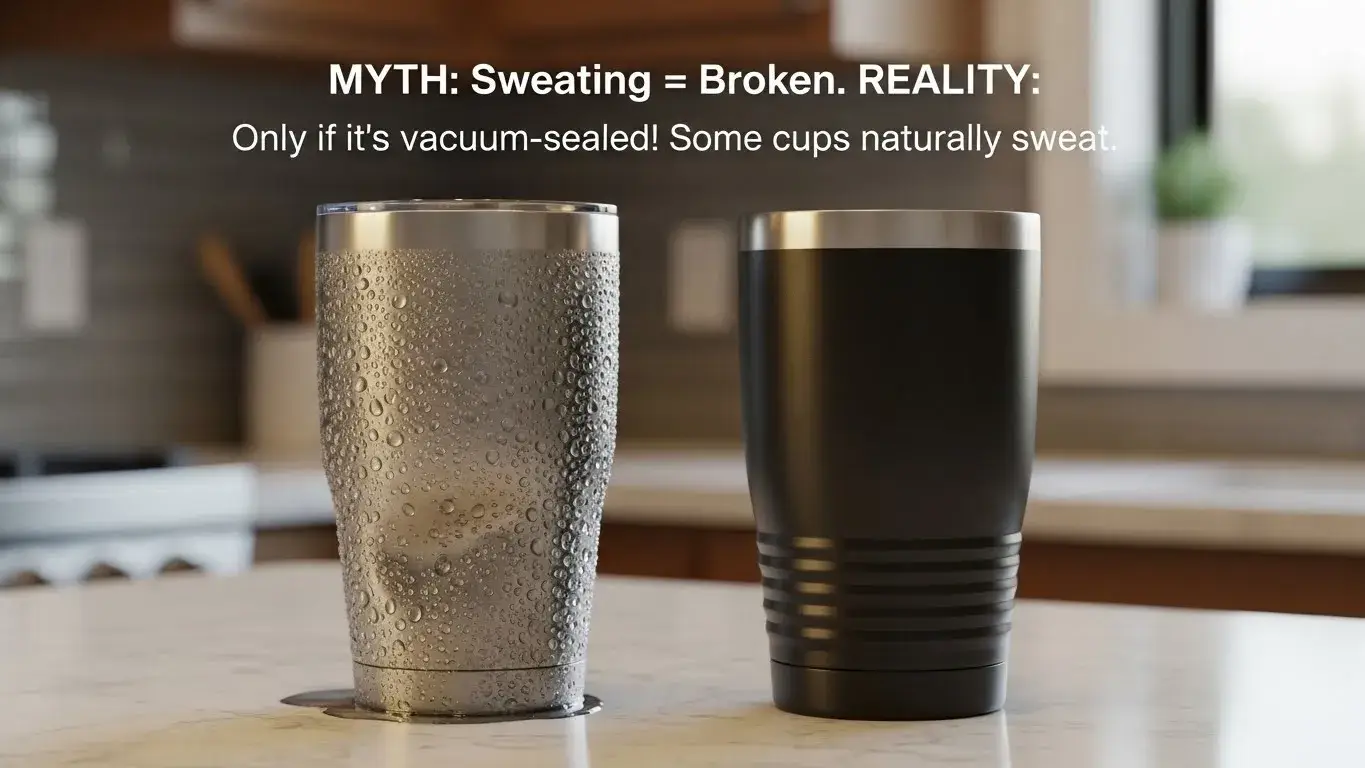
Myths vs. Reality
-
Myth: "It stays hot forever."
Reality: Heat loss still happens. Even the best cup cools after 12-24 hours. -
Myth: "If it sweats, it's broken."
Reality: True—sweating is a sign the vacuum is compromised. -
Myth: "All stainless steel is the same."
Reality: Lower grades rust, leach metals, or warp over time.
Pitfalls You Should Avoid
- Dropping the Cup: Dents damage the vacuum seal. Just one fall can cut performance in half.
- Dishwasher Cleaning: High heat can warp seals and degrade insulation.
- Using With Carbonated Drinks: Pressure build-up might damage seals over time.
“The biggest mistake I made? Tossing my cup in the dishwasher—now it barely keeps drinks warm.” – Personal Note
Environmental Concerns
While reusable, many insulated cups are not easily recyclable. The mixed materials make recycling difficult without specialized facilities.
How Can You Get the Most Out of Your Insulated Cup for Everyday Use?
Using an insulated cup is simple—but a few tricks can make a huge difference.
Pre-warming or pre-cooling your cup, sealing it tight, and proper cleaning can boost performance by 10–20%.
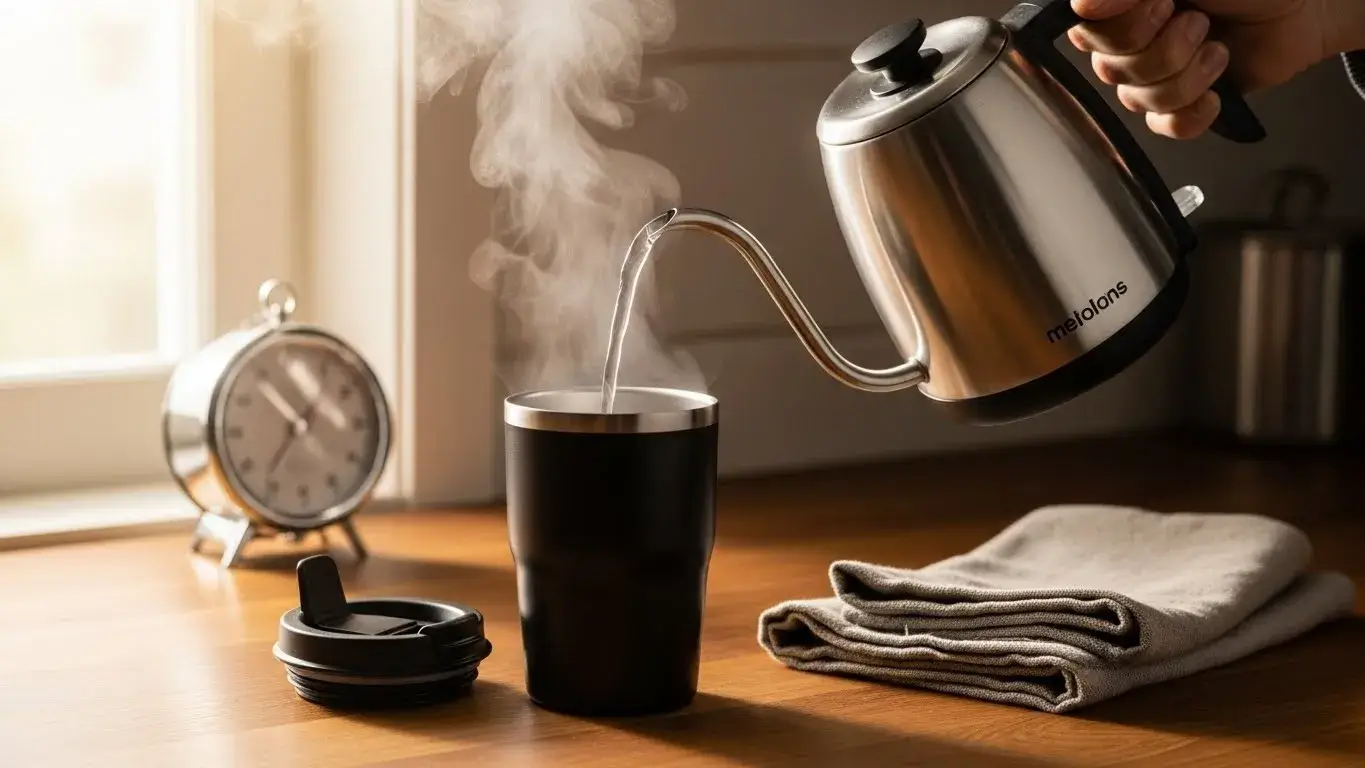
Daily Usage Tips
- Pre-Heat or Pre-Chill: Pour hot or cold water into the cup for 5 minutes before filling.
- Seal It Right: Ensure the lid is closed properly. Even a slight crack speeds up heat loss.
- Don’t Overfill: Leave 1-2 cm of space to prevent spills and allow lid sealing.
- Avoid Abrasives: Hand-wash with soft brushes. Dishwashers can reduce lifespan by 20%.
- Storage Tip: Store it open to prevent odors or mildew.
Add Accessories for Better Results
- Neoprene Sleeves: Extra insulation and better grip.
- Clip Handles: Easy to carry on bags.
- Temp Trackers: Bluetooth-enabled lids track internal temperature.
“I preheat my cup while brewing coffee. That little habit helps it stay piping hot until lunch.”
| Action | Benefit |
|---|---|
| Pre-warming | 10–15% better heat retention |
| Silicone Lid Seal | Prevents heat and spill |
| Regular Cleaning | Avoids flavor residue buildup |
| Hand Washing | Preserves vacuum seal |
Conclusion
Insulated cups work by blocking heat flow with vacuum layers and reflective linings, offering efficient temperature control when properly used.
FAQs
How long can an insulated cup keep drinks hot or cold?
Top-quality models hold heat for 6–12 hours and cold for 12–24 hours, depending on lid, ambient temp, and fill level.
Can I use an insulated cup for carbonated drinks?
Yes, but avoid long-term storage—built-up pressure can wear seals over time.
Is it safe to put insulated cups in the dishwasher?
Only if labeled dishwasher-safe. Otherwise, hand washing is safer to preserve seals.
Why is my cup sweating on the outside?
Sweating means the vacuum seal is broken—your cup’s insulation is likely compromised.
Can I put my cup in the freezer?
No—freezing may crack seals or deform the vacuum layer. Pre-chill instead.
Does copper lining make a big difference?
Yes. It reflects infrared radiation, improving heat retention by up to 30% in some models.