English
 Arabic
 Chinese (Simplified)
 Dutch
Dutch French
 German
 Italian
 Japanese
 Korean
 Portuguese
 Russian
 Spanish
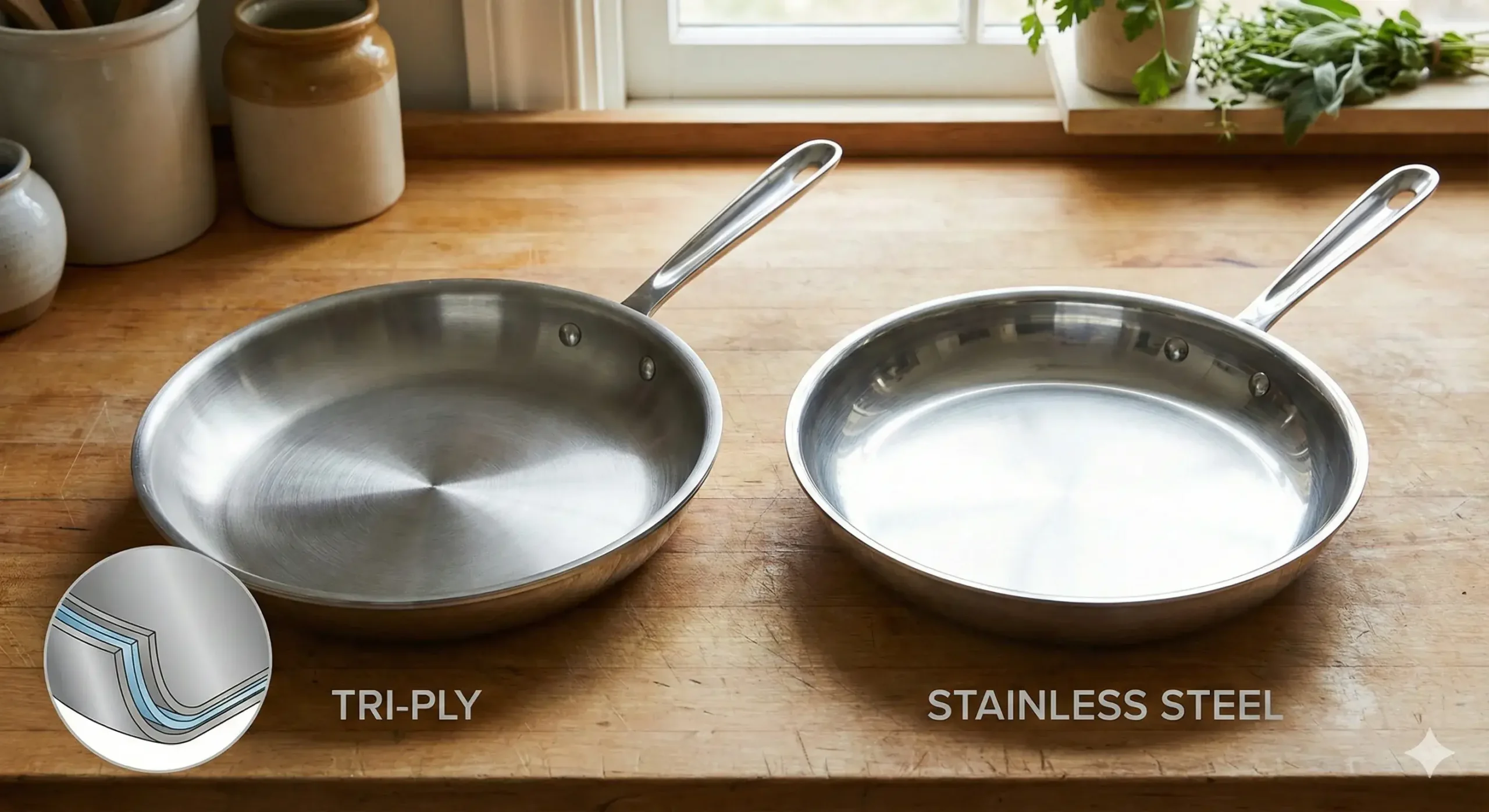
Buying cookware can be confusing. Many people struggle to decide between tri-ply and stainless steel. Here's how to make the right choice.
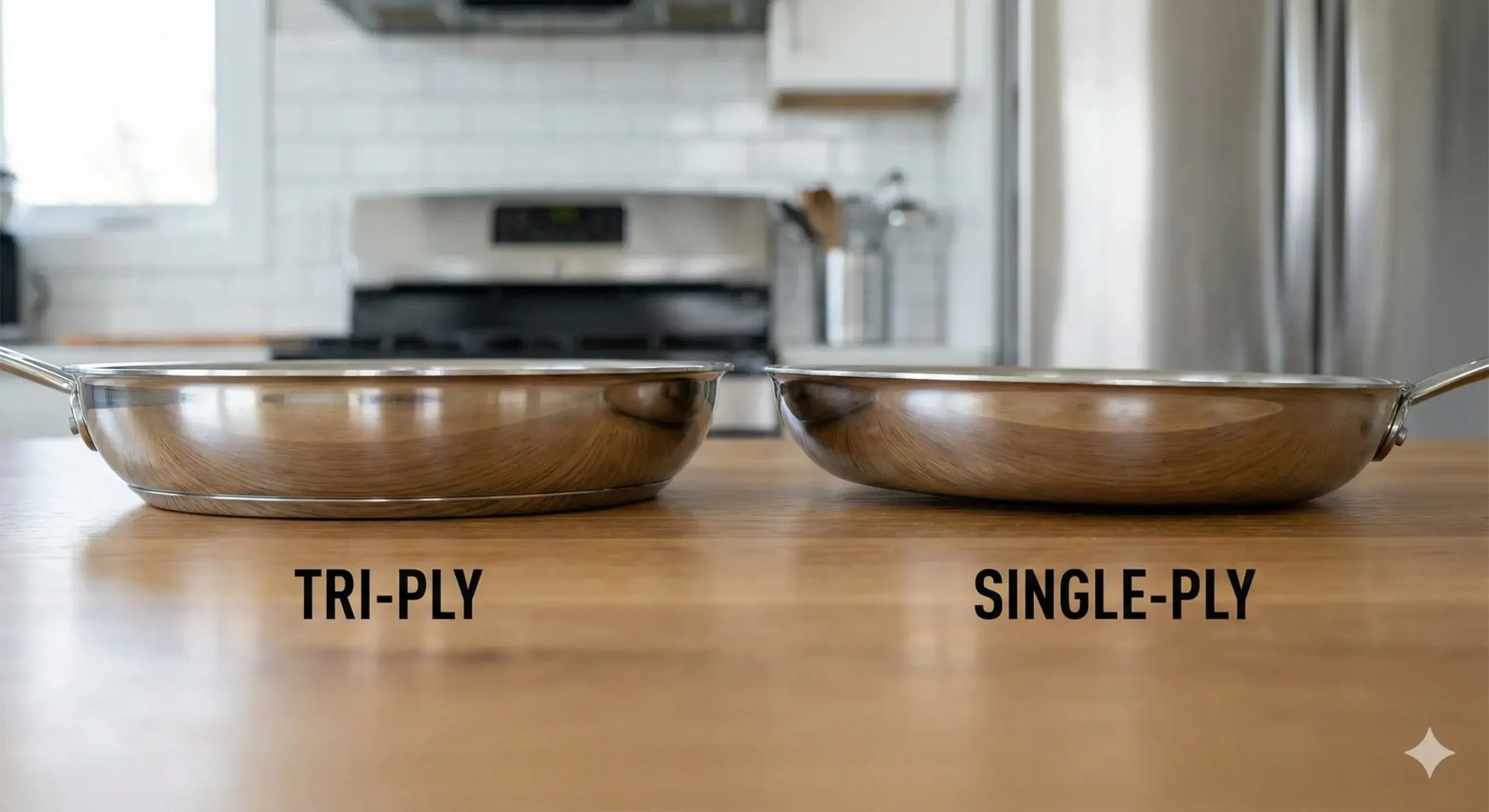
Tri-ply cookware is made of three bonded layers: two stainless steel layers sandwiching an aluminum core, offering better heat distribution and cooking performance than single-ply stainless steel.
Keep reading to learn about materials, performance, safety, and price—so you can cook smarter and buy better.
What Is Tri-Ply Cookware? Understanding the Construction?
Shoppers often see "tri-ply" but don't know what it means. Let's break it down.
Tri-ply cookware includes three bonded layers: stainless steel on the outside and inside, with an aluminum core for better heat conduction.
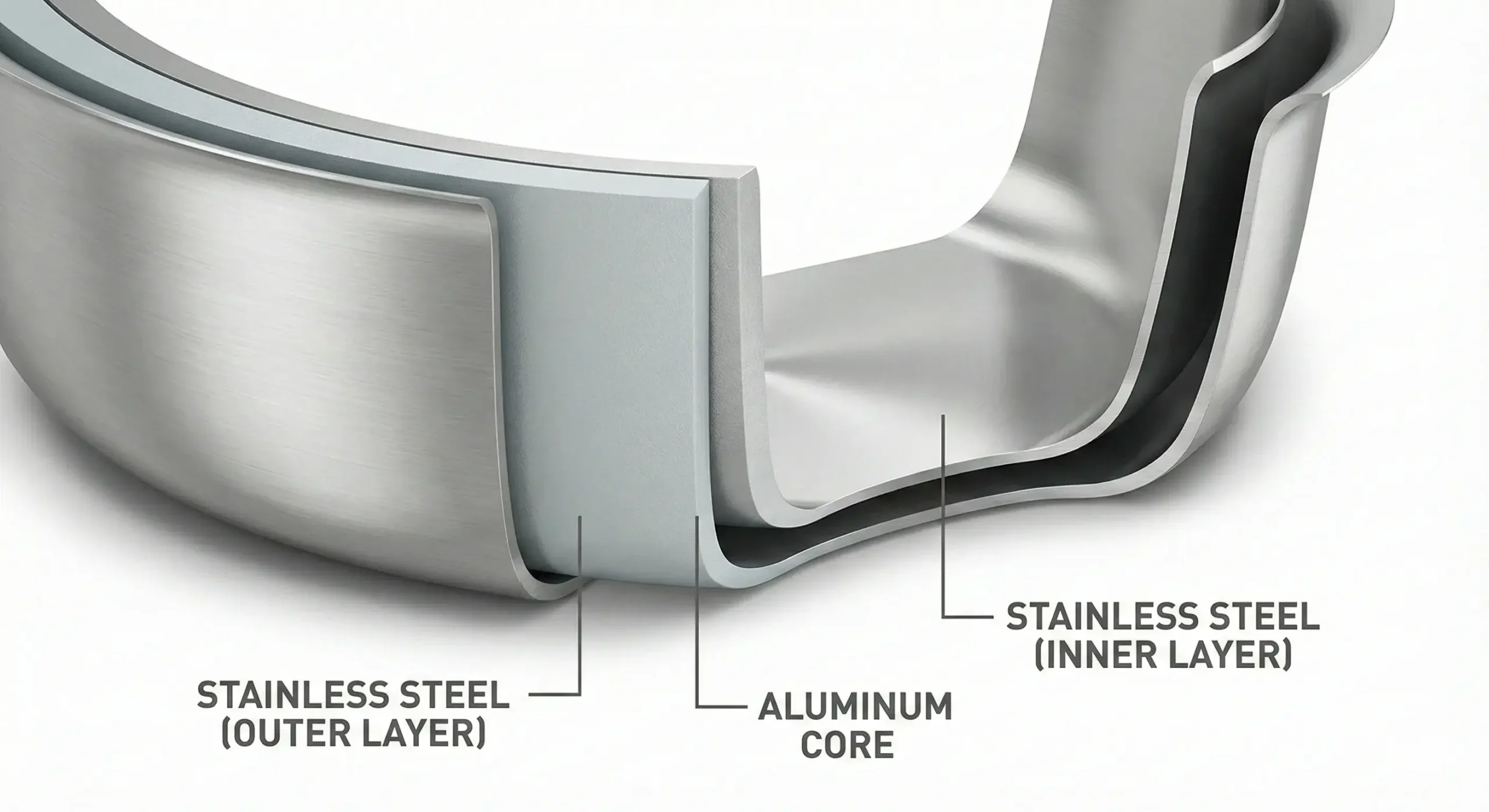
Why Tri-Ply Matters
- Stainless Steel Layers: Provide durability and a non-reactive surface1
- Aluminum Core: Offers even heat distribution2
- Bonded Construction: Improves strength and cooking efficiency3
This layered construction is ideal for cooking evenly, reducing hotspots, and maintaining safe, long-lasting cookware.
Single-Ply Stainless Steel vs. Tri-Ply: Key Differences?
It looks the same, but the performance isn't.
Single-ply has just one layer of stainless steel; tri-ply has three layers that work together for better results.
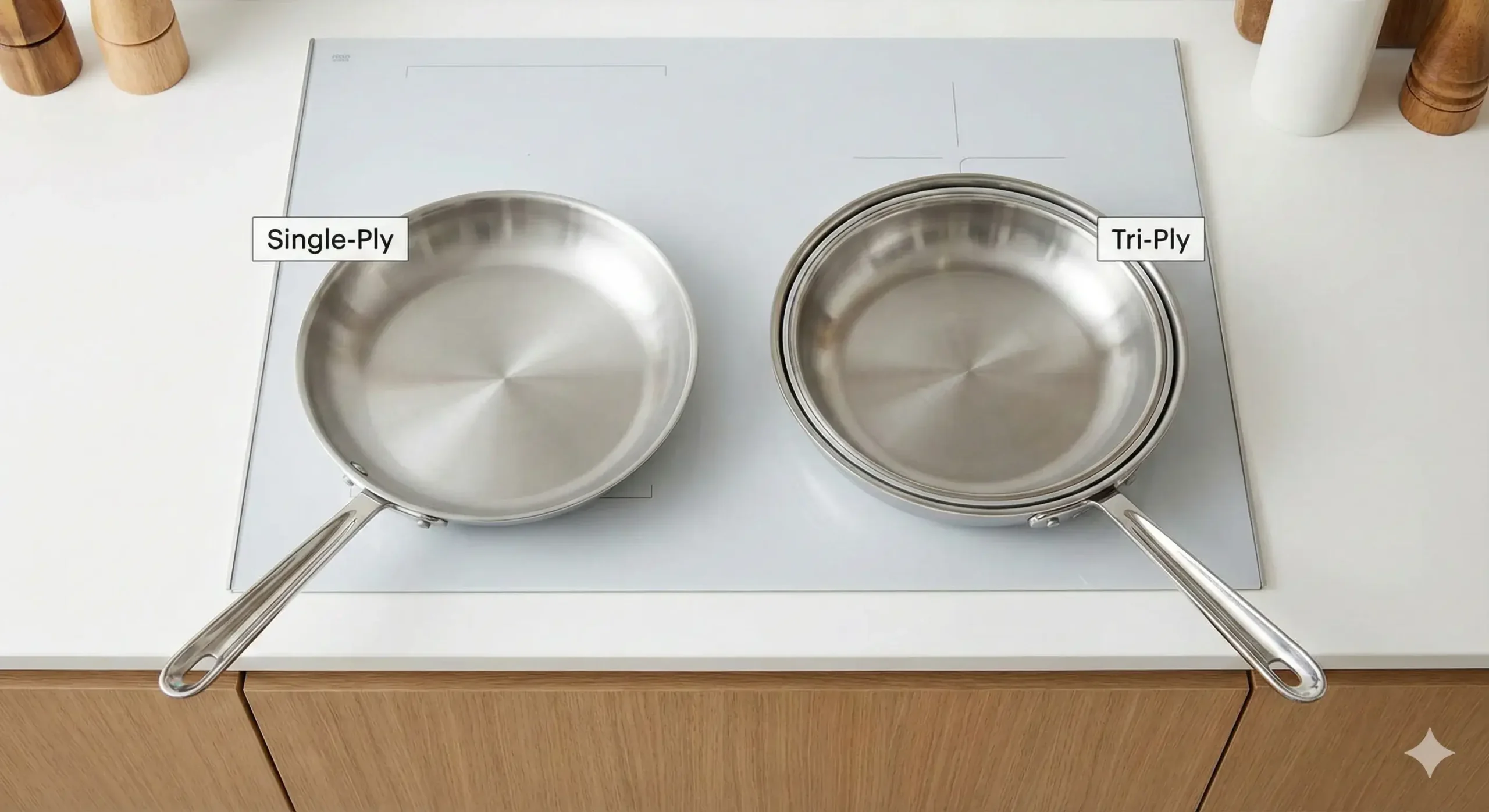
Comparison Table
| Feature | Single-Ply Stainless Steel | Tri-Ply Stainless Steel |
|---|---|---|
| Layers | One | Three: SS + Aluminum + SS |
| Heat Distribution | Uneven, hot spots | Even, consistent heat |
| Durability | May warp under heat | Stronger, more resistant |
| Price | Lower upfront | Higher but better value |
Tri-ply gives better cooking performance at a slightly higher price, making it a top choice for home chefs.
How Does Tri-Ply Improve Heat Distribution?
Even cooking makes your food better and safer.
The aluminum core in tri-ply cookware spreads heat evenly across the entire surface, preventing hot spots.
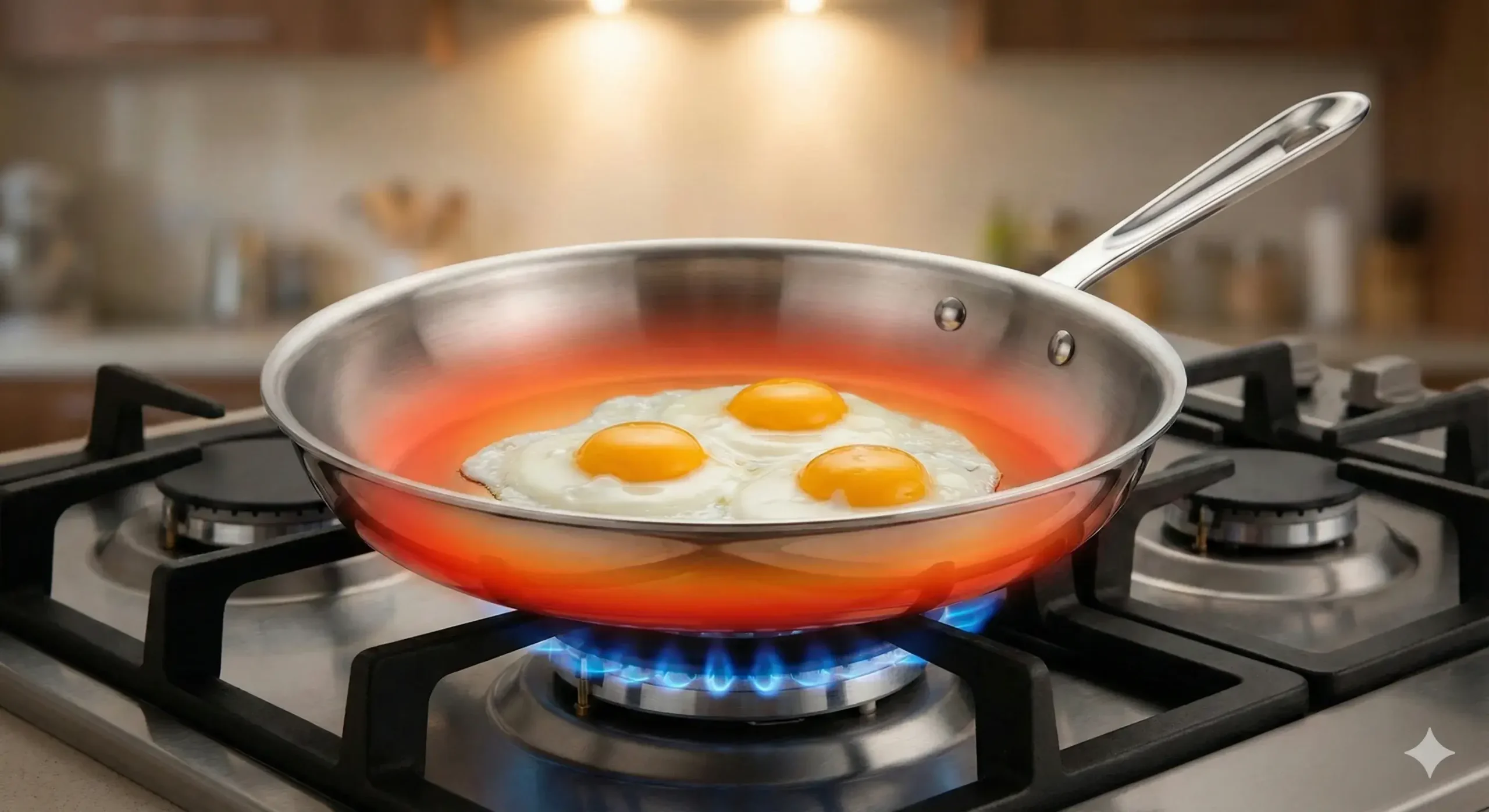
Why It Matters
- Prevents Burning: No more scorched areas
- Better Control: Makes delicate dishes easier
- More Efficiency: Heats up faster4, saves time
Compare with Single-Ply
Single-ply stainless steel can overheat in one spot while staying cold elsewhere. Tri-ply solves this issue, improving food quality and cooking safety5.
Durability and Maintenance: Tri-Ply vs. Standard Stainless Steel?
Will your cookware last? Let's compare.
Tri-ply cookware is more resistant to warping and denting due to its multi-layered construction.
Maintenance Tips
- Both types are dishwasher safe6
- Avoid metal scouring pads
- Dry thoroughly to avoid water spots
Lifespan
Well-maintained tri-ply cookware can last decades, especially if the bonding process7 is done well.
Health and Safety: Is Tri-Ply Cookware Safe?
Your health matters in the kitchen.
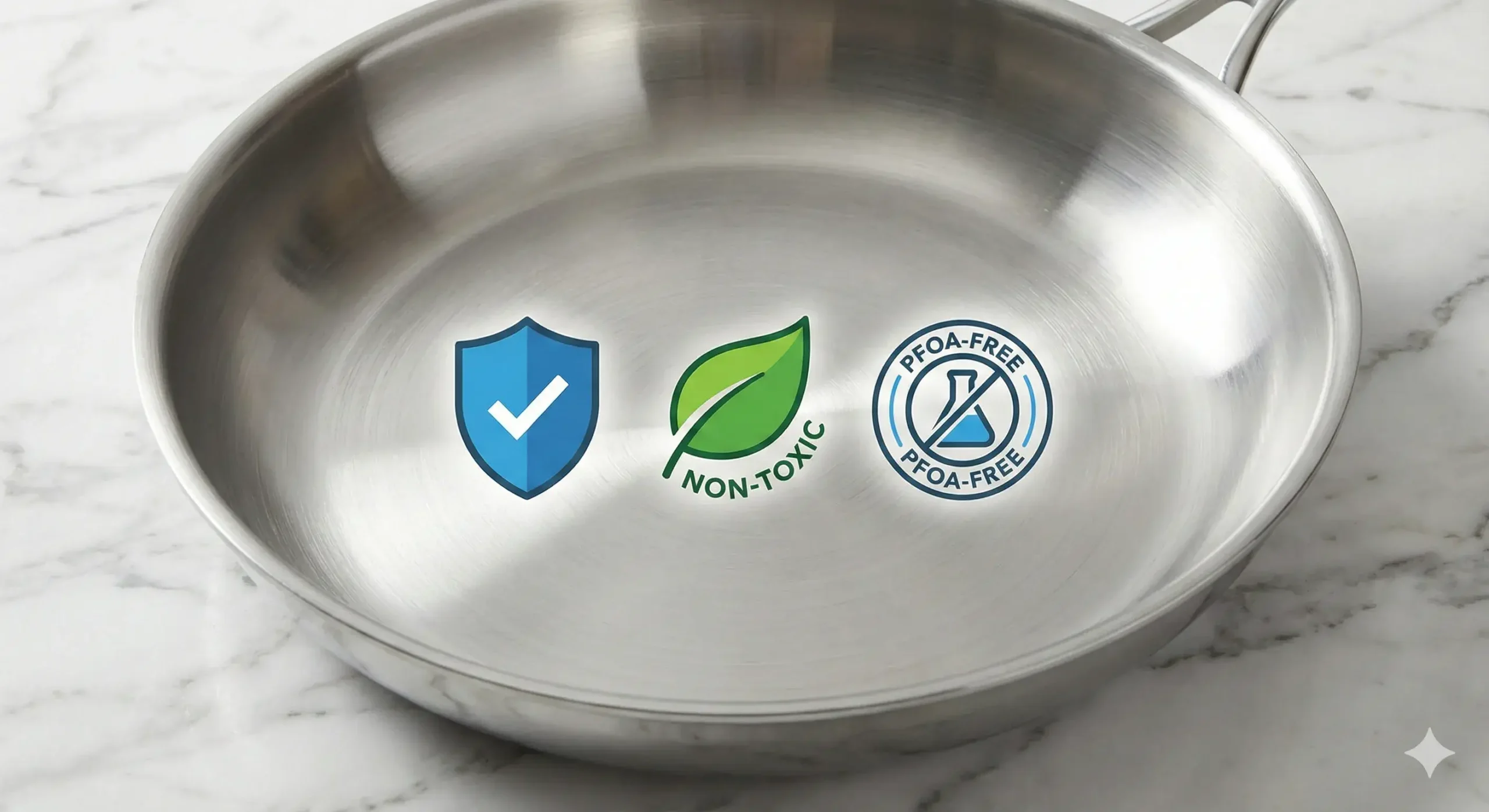
Tri-ply cookware with a stainless steel surface is safe, non-reactive, and free from toxic coatings.
Safety Features
- No chemical coatings8 like Teflon
- Stainless steel surface won't leach into food
- Safe for all cooking methods9
Choose tri-ply for safe and healthy cooking without worry.
Price Comparison: Is Tri-Ply Worth the Investment?
Is the extra cost worth it?
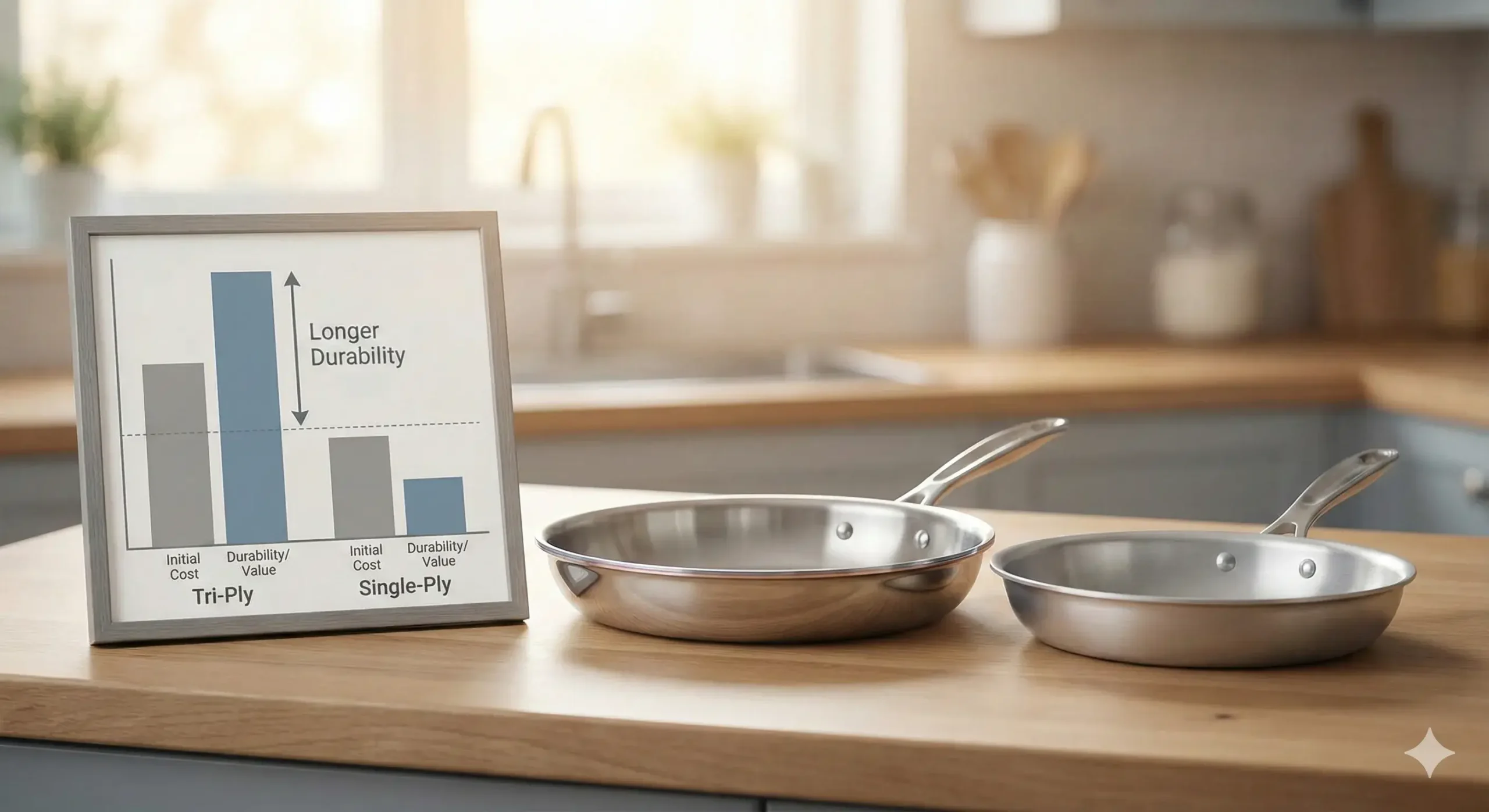
Tri-ply cookware costs more upfront but lasts longer and cooks better, making it a smart investment.
Value Breakdown
| Factor | Single-Ply | Tri-Ply |
|---|---|---|
| Initial Cost | Lower | Higher |
| Lifespan | Shorter | Longer |
| Cooking Results | Basic | Professional |
Tri-ply often saves money over time by reducing replacements10 and improving food outcomes.
Cooking Performance: Which Is Better for Different Cooking Styles?
Not all pans perform the same.
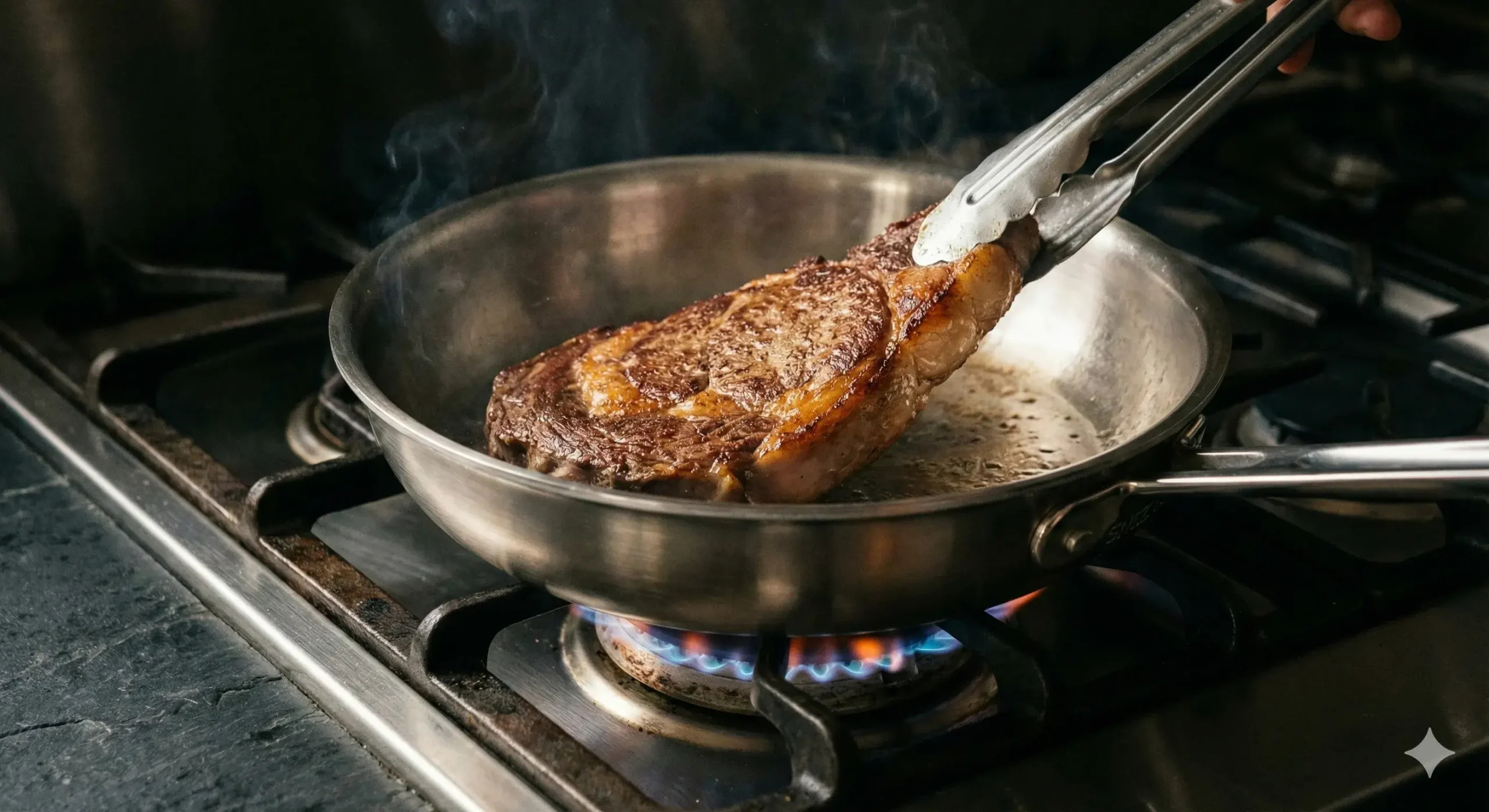
Tri-ply excels in sautéing, searing, and simmering due to even heat distribution. Single-ply may struggle with delicate or high-precision cooking.
Cooking Style Guide
- Tri-Ply: Best for sauces, meats, stir-fries
- Single-Ply: Good for boiling, basic frying
Better performance means fewer cooking mistakes and better tasting food11.
Compatibility with Cooktops: Induction and More?
Will it work on your stove?
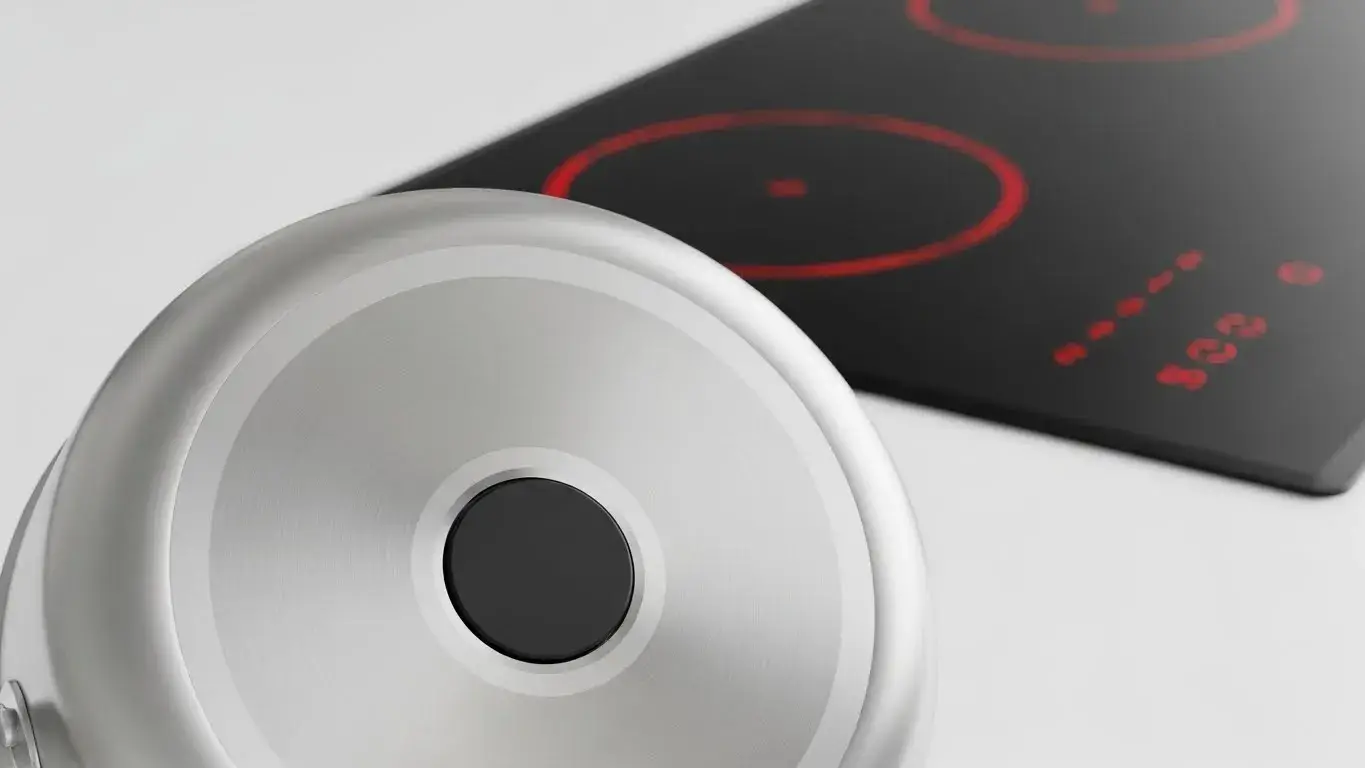
Both tri-ply and stainless steel cookware are induction-compatible if they have a magnetic stainless steel base.
How to Check
- Use a magnet. If it sticks to the bottom, it works on induction.
- Most modern tri-ply pans are designed for all cooktops12.
Tri-ply offers flexibility no matter what stove you use.
Common Myths About Tri-Ply and Stainless Steel Cookware?
Some myths just won't go away.
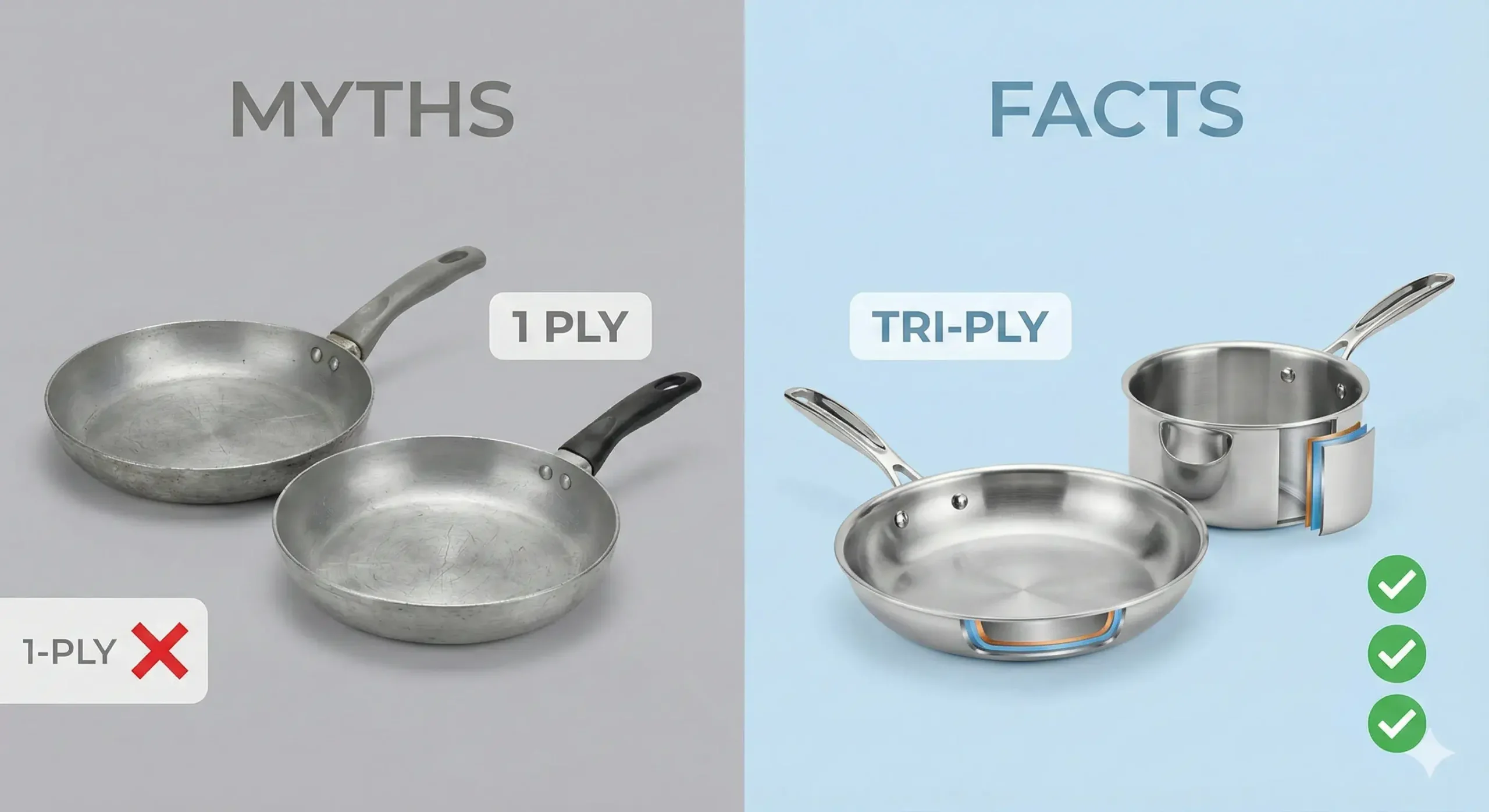
Many believe all stainless steel is the same or that tri-ply isn't worth the price—both are incorrect.
Debunked Myths
- Myth: Stainless steel is toxic — False, it's non-reactive.
- Myth: Tri-ply is just marketing — False, the aluminum core improves cooking.
Understanding the facts helps you make better choices13.
Industry Trends and Consumer Preferences in Cookware Materials?
What do others choose and why?
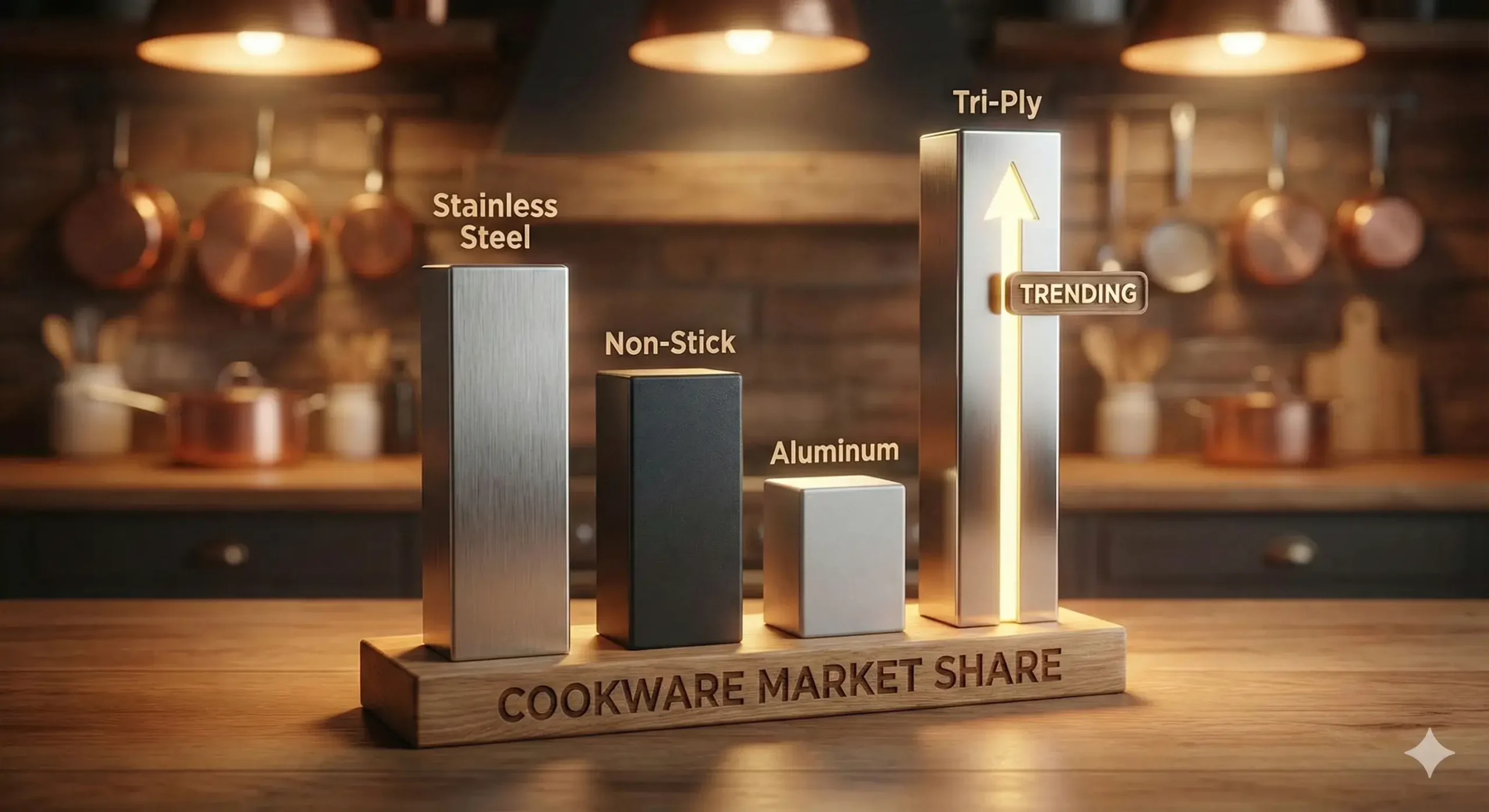
Stainless steel remains the top cookware material by market share, and tri-ply is growing fast due to consumer demand for performance.
Market Data
| Cookware Type | Market Share (2023) |
|---|---|
| Stainless Steel | 26.8% |
| Non-Stick | 21.4% |
| Aluminum | 18.9% |
Tri-ply meets a growing demand for high-performance cookware14.
Conclusion
Tri-ply cookware is better than single-ply stainless steel in performance, durability, and safety—making it a smart kitchen upgrade.
Frequently Asked Questions
Is tri-ply cookware better than stainless steel?
Yes. It heats more evenly, lasts longer, and delivers better cooking performance.
What is tri-ply cookware made of?
Three layers: stainless steel on the outside, aluminum in the center, and another layer of stainless steel inside.
Is tri-ply cookware safe?
Yes. It is non-reactive, free from coatings, and does not leach metals into food.
Is tri-ply cookware compatible with induction cooktops?
Yes, if the outer stainless steel layer is magnetic.
Is tri-ply cookware dishwasher safe?
Most are, but hand washing preserves finish better.
What is the difference between 3-ply and 5-ply cookware?
5-ply includes more layers for extra heat control but may be heavier and more expensive.
Can I use metal utensils with tri-ply cookware?
Yes, though using wooden or silicone tools helps maintain the surface.
How long does tri-ply cookware last?
With care, it can last decades, especially premium brands.
Is tri-ply worth the price?
Yes. It delivers better cooking results, durability, and long-term value.
How should I clean tri-ply cookware?
Use warm water, mild soap, and avoid abrasive cleaners or scouring pads.
Footnotes:
-
This resource from Prudent Reviews explains why stainless steel's non-reactive properties make it one of the safest materials for cookware, backed by research from Oregon State University on minimal metal leaching. ↩
-
Thermtest's scientific analysis details aluminum's thermal conductivity of 205 W/(m·K), explaining how this property enables quick and even heat distribution in cookware construction. ↩
-
Made In Cookware explains the cladding process where layers of different metals are stamped together, creating cookware that performs consistently, responds instantly, and heats quickly. ↩
-
Stahl Kitchens details how tri-ply construction enables efficient fuel consumption and even heat distribution, with the aluminum layer helping food cook faster and more evenly. ↩
-
Caraway's safety guide explains how stainless steel cookware eliminates health concerns associated with PFOA, PTFE, lead, and cadmium, providing clean and reliable cooking surfaces. ↩
-
Most tri-ply cookware manufacturers confirm dishwasher safety, though hand washing is recommended to preserve the finish and extend lifespan. ↩
-
Quality bonding in tri-ply cookware prevents layer separation over time, with proper manufacturing ensuring decades of reliable performance. ↩
-
Healthline's comprehensive guide examines PTFE coating safety concerns, including potential risks at high temperatures and the benefits of chemical-free alternatives like stainless steel. ↩
-
All-Clad's D3 collection demonstrates tri-ply versatility with compatibility across gas, electric, and induction cooktops, plus oven-safe use up to 600°F. ↩
-
High-quality tri-ply cookware with lifespans of 10-20+ years reduces long-term replacement costs compared to nonstick alternatives that typically last 3-5 years. ↩
-
Even heat distribution in tri-ply cookware enables precise temperature control for techniques like searing and simmering, resulting in better flavor development and texture. ↩
-
Good Housekeeping's expert testing confirms that tri-ply stainless steel with magnetic exterior layers delivers excellent heat distribution and performance on all stovetops including induction. ↩
-
Understanding the material science behind tri-ply construction helps consumers make evidence-based decisions rather than relying on common misconceptions about stainless steel cookware. ↩
-
Grand View Research market data shows stainless steel cookware dominated with 26.82% revenue share in 2023, reflecting growing consumer preference for durable, high-performance cookware materials. ↩