English
 Arabic
 Chinese (Simplified)
 Dutch
Dutch French
 German
 Italian
 Japanese
 Korean
 Portuguese
 Russian
 Spanish
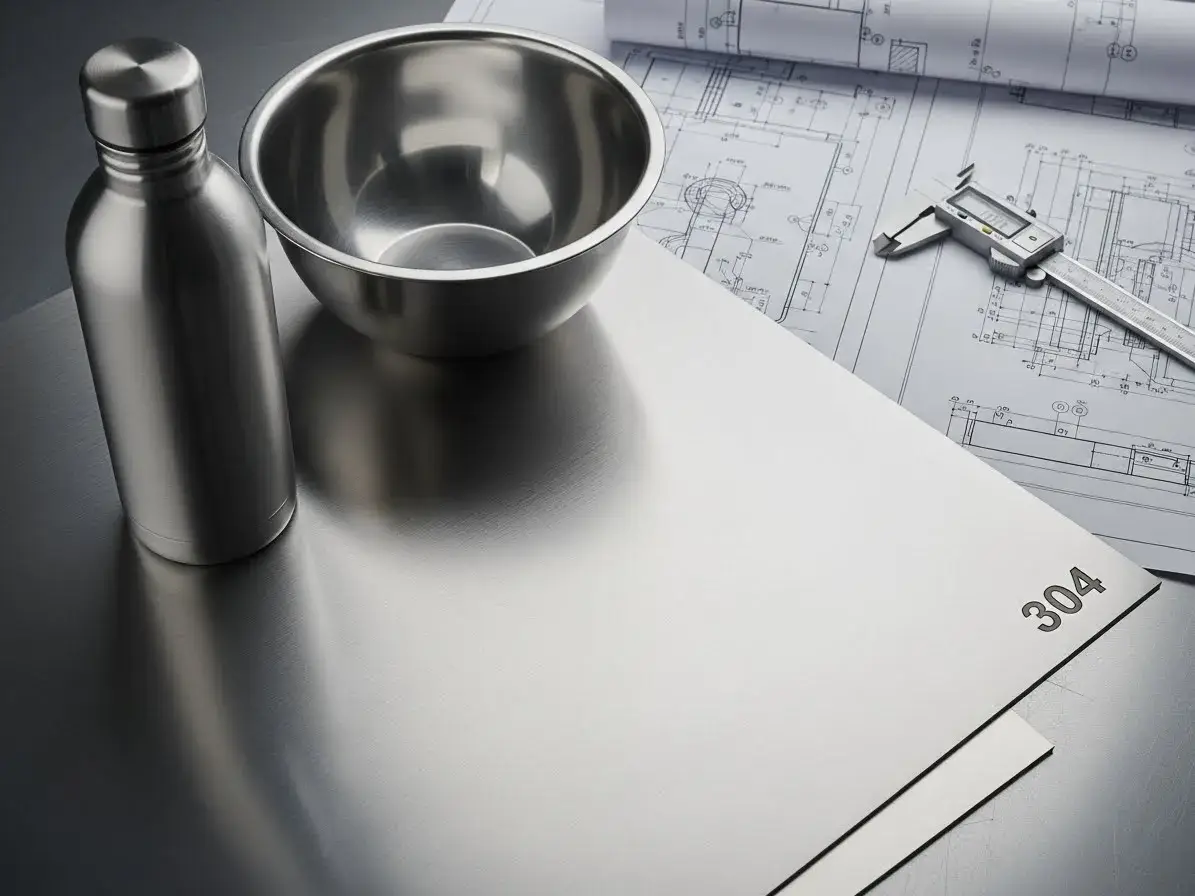
Struggling to choose the right stainless steel? The wrong material leads to corrosion, costly repairs, and lost customers.
304 stainless steel is a corrosion-resistant, versatile alloy composed mainly of iron, chromium, and nickel, widely used across industries for its durability and weldability.
Learn how this alloy balances strength, price, and performance—without sacrificing food safety or reliability.
What Is 304 Grade Stainless Steel and Why Is It Important?
Corrosion ruins equipment and leads to expensive replacements. 304 stainless steel was developed to solve that problem.
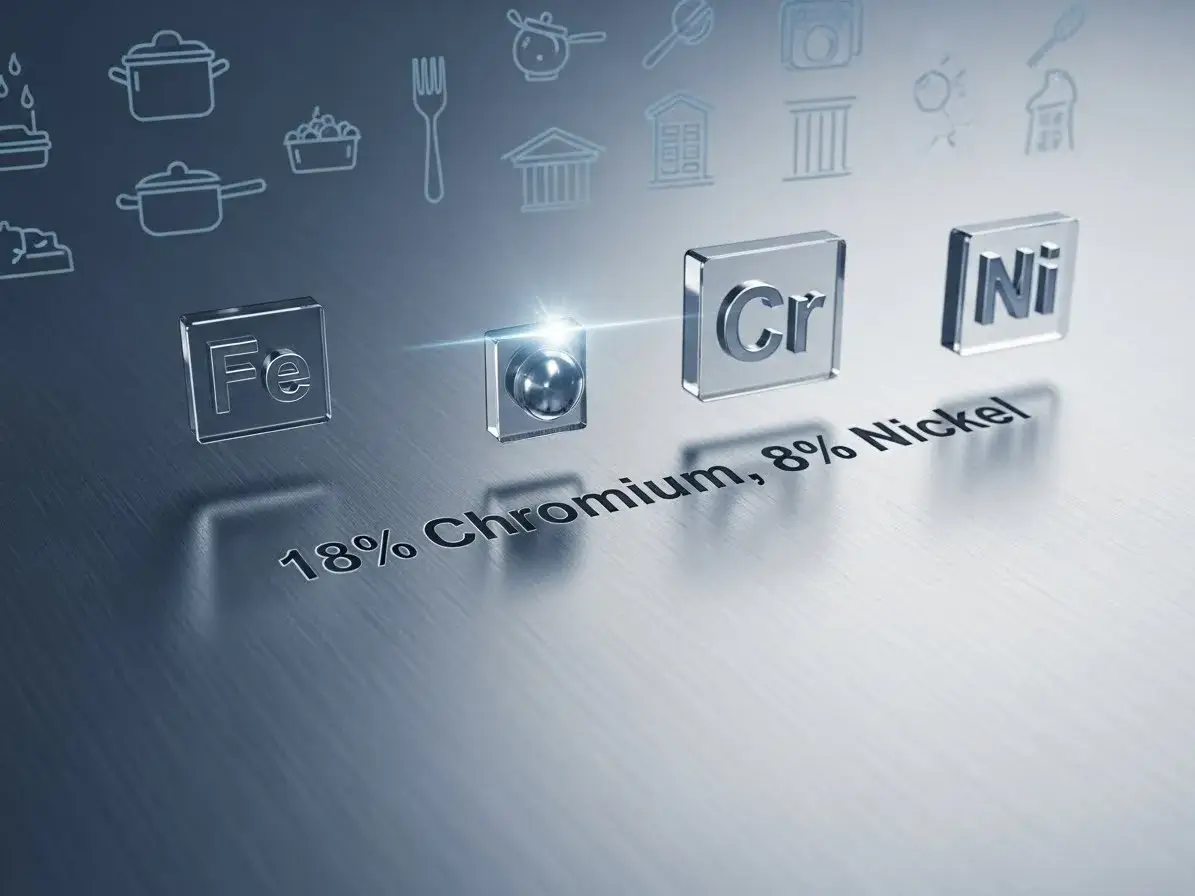
304 stainless steel is an austenitic alloy1 made of iron, 18–20% chromium, and 8–10.5% nickel, offering corrosion resistance and high durability.
Understanding the Material
Also called 18/8 stainless steel2, 304 is the most common grade due to its excellent performance across temperature ranges and environments.
It resists rust, maintains strength, and remains easy to clean. These properties make it perfect for food processing, architectural structures, and even high-end water bottles.
What Are the Chemical Compositions and Variants of 304 Stainless Steel?
Buyers often confuse 304 with 304L or 304H, risking performance issues.
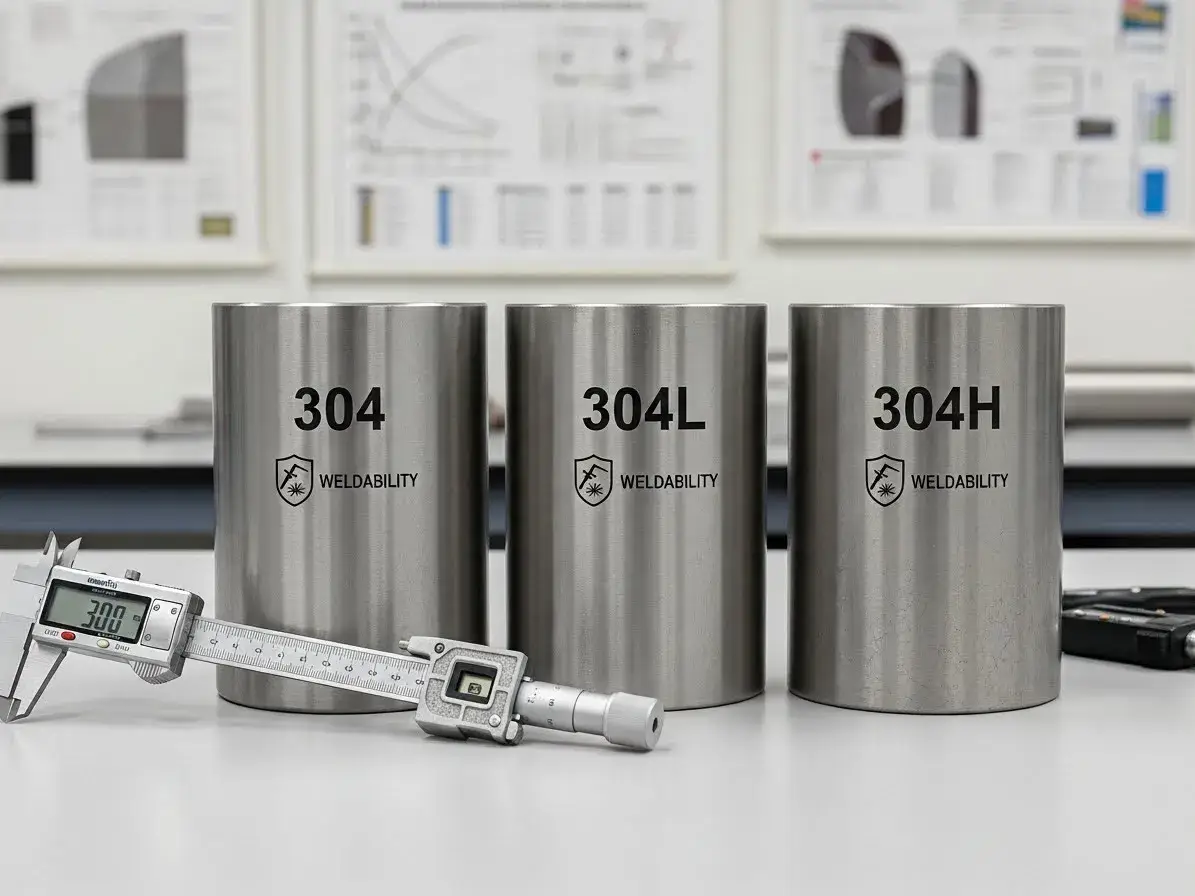
304 stainless steel contains max 0.08% carbon, while 304L has 0.03% for weldability and 304H up to 0.10% for high-temperature strength.
Compare the Variants
| Variant | Carbon Content | Key Advantage | Common Use |
|---|---|---|---|
| 304 | Max 0.08% | Standard corrosion resistance | Kitchenware, consumer goods |
| 304L | Max 0.03% | Better weldability, no carbide issues | Tanks, piping |
| 304H | Up to 0.10% | High temperature strength | Boilers, pressure vessels |
Manufacturers must choose based on welding needs or temperature exposure. Choosing the wrong variant can cause weld cracks or premature failure.
What Are the Physical and Mechanical Properties of 304 Stainless Steel?
High stress and moisture ruin ordinary metals—but not 304 stainless steel.
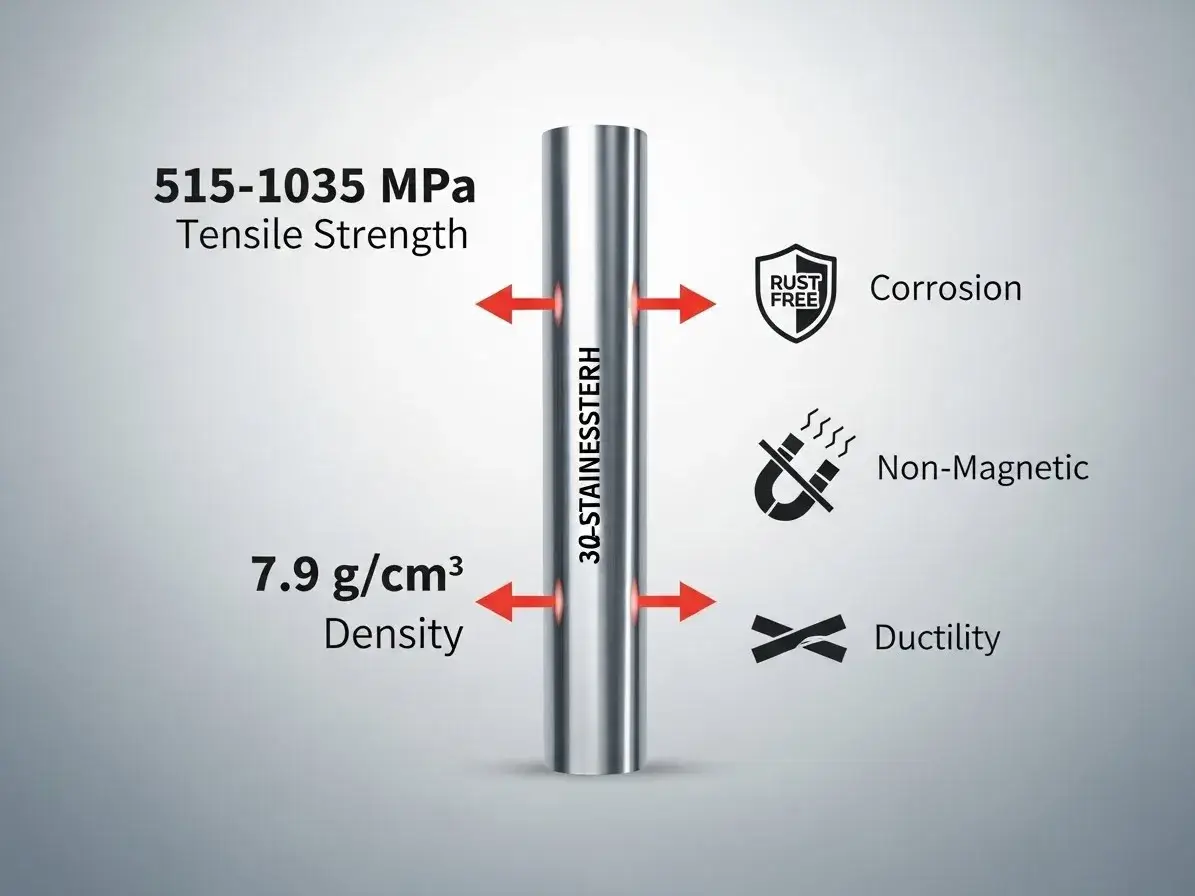
304 stainless steel has a density of 7.9 g/cm³, tensile strength of 515–1035 MPa, and excellent corrosion resistance.
Key Mechanical Characteristics
- Non-magnetic in annealed state
- Yield strength: 210–1050 MPa
- High ductility: Easily bent and formed
- Cold working: Improves strength
- Heat treatment: Not suitable for hardening
It resists acids and salt exposure, which is why it's ideal for food-grade containers, medical tools, and outdoor installations.
How Is 304 Stainless Steel Manufactured and Fabricated?
Inconsistent quality can stem from poor processing methods.
304 stainless steel is created by melting base elements in electric furnaces, followed by decarburization and hot/cold forming.
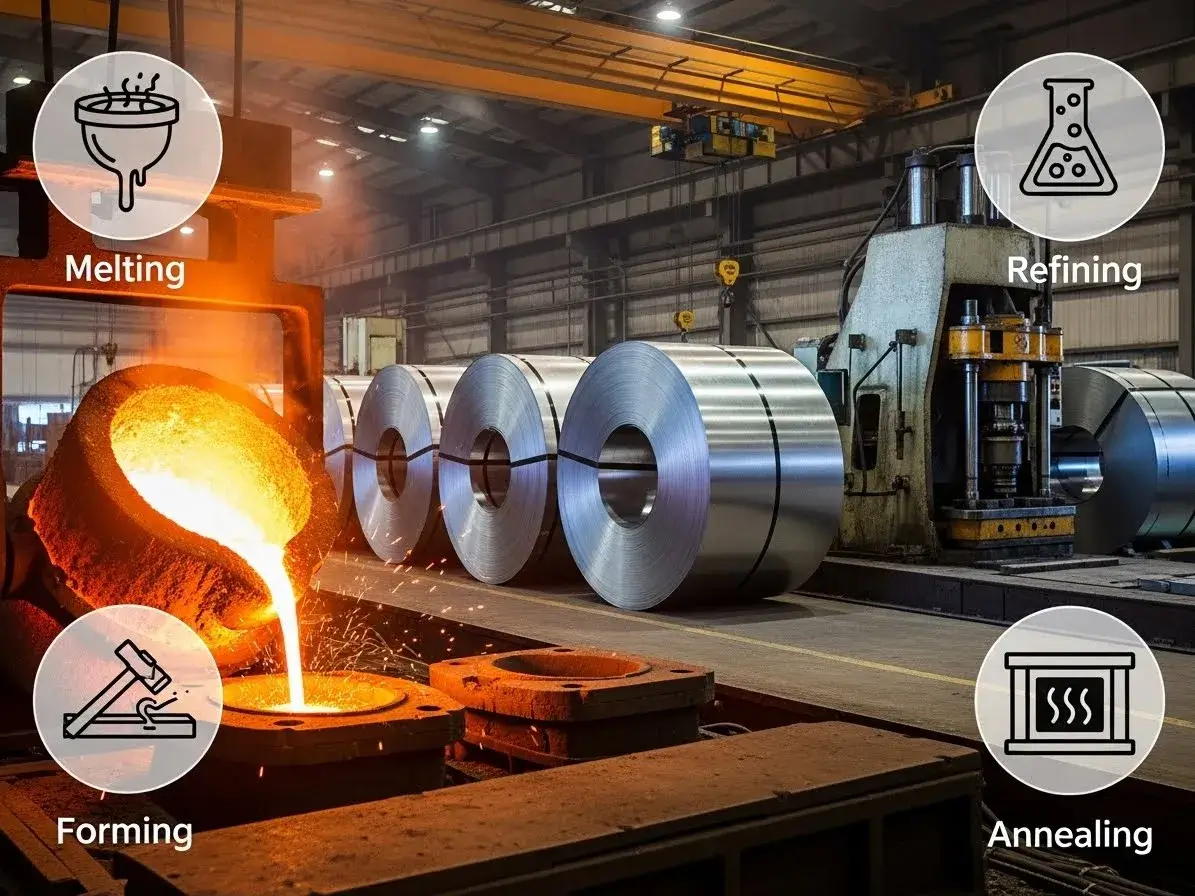
From Raw Material to Finished Product
- Melting – Iron, nickel, and chromium are fused
- Refining – Impurities are removed
- Forming – Rolled into sheets, bars, or coils
- Annealing – Softens and stabilizes structure
- Finishing – Polished or brushed based on application
No heat treatment can harden it, but cold rolling boosts strength. That's why products like reusable bottles often use cold-worked 304 steel.
Where Is 304 Stainless Steel Commonly Used?
It's used in everything from cookware to skyscrapers—but why?
304 stainless steel is widely used in kitchenware, architecture, food processing, medical devices, and automotive components.
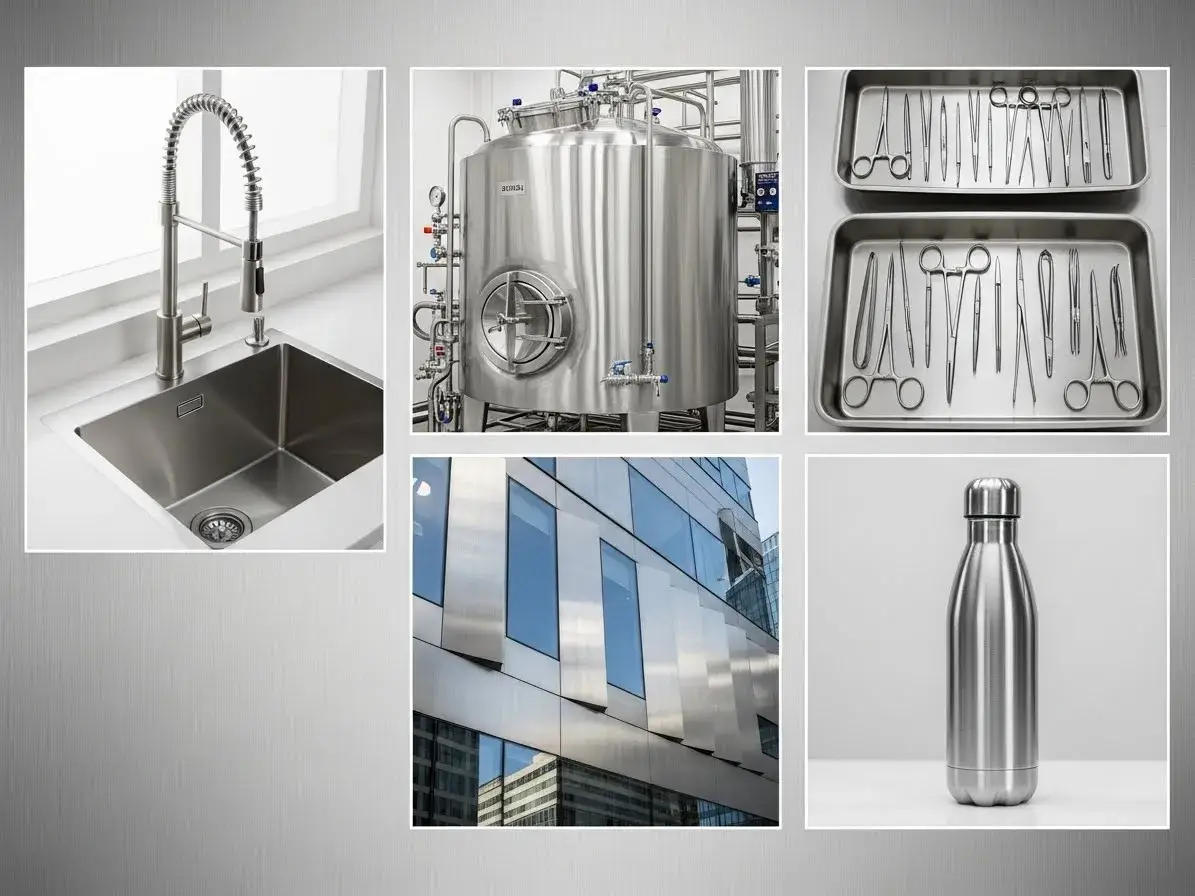
Typical Applications
- Kitchenware – Cutlery, sinks, mixing bowls
- Food industry – Processing tanks, piping
- Architecture – Building panels, railings
- Medical – Surgical instruments, hospital carts
- Auto industry – Exhaust components
Its hygiene, strength, and appearance make it perfect for both commercial and consumer applications. Even in our factory, we use it in bottle production to ensure food safety.
Why It Works Across So Many Sectors
1. Hygienic Properties
304 stainless steel does not harbor bacteria or absorb contaminants. This makes it ideal for industries requiring clean environments like food processing, healthcare, and pharmaceutical production.
2. Aesthetic and Structural Qualities
It has a clean, polished look and resists tarnishing. That's why it's widely used in architectural paneling, sculptures, and decorative trim. It's strong enough to support structural loads while being lightweight compared to other materials.
3. Formability and Weldability
Manufacturers can easily bend, mold, and weld 304 stainless steel into complex shapes. This flexibility reduces production time and costs, especially for custom-designed items like promotional water bottles or medical devices.
4. Heat and Chemical Resistance
It withstands exposure to heat and many chemicals without degrading. That's essential in exhaust systems, chemical tanks, and kitchen equipment exposed to high temperatures.
5. Longevity and Value
Although not the cheapest grade, 304 stainless steel offers long-term value through its low maintenance, recyclability, and performance. It resists rust even in humid environments, making it a reliable choice for outdoor and marine-adjacent applications.
"In our factory, we choose 304 stainless steel for bottles because it balances cost, quality, and health safety. Clients love the long-lasting value."
Application Matrix
| Industry | Use Case | Key Benefit |
|---|---|---|
| Food & Beverage | Processing tanks, cookware, bottles | Hygiene & corrosion resistance |
| Architecture | Panels, railings, decorative trim | Aesthetics & strength |
| Healthcare | Surgical tools, carts, equipment housing | Sterility & formability |
| Automotive | Exhausts, engine components | Heat resistance & durability |
| Consumer Goods | Drinkware, kitchen tools | Safety & customization |
How Does 304 Stainless Steel Compare to Other Grades Like 316 or 430?
Not all stainless steels perform the same in every environment.
304 lacks molybdenum, unlike 316, which also contains some molybdenum3, making it less corrosion-resistant; 430 is cheaper but less durable and magnetic.
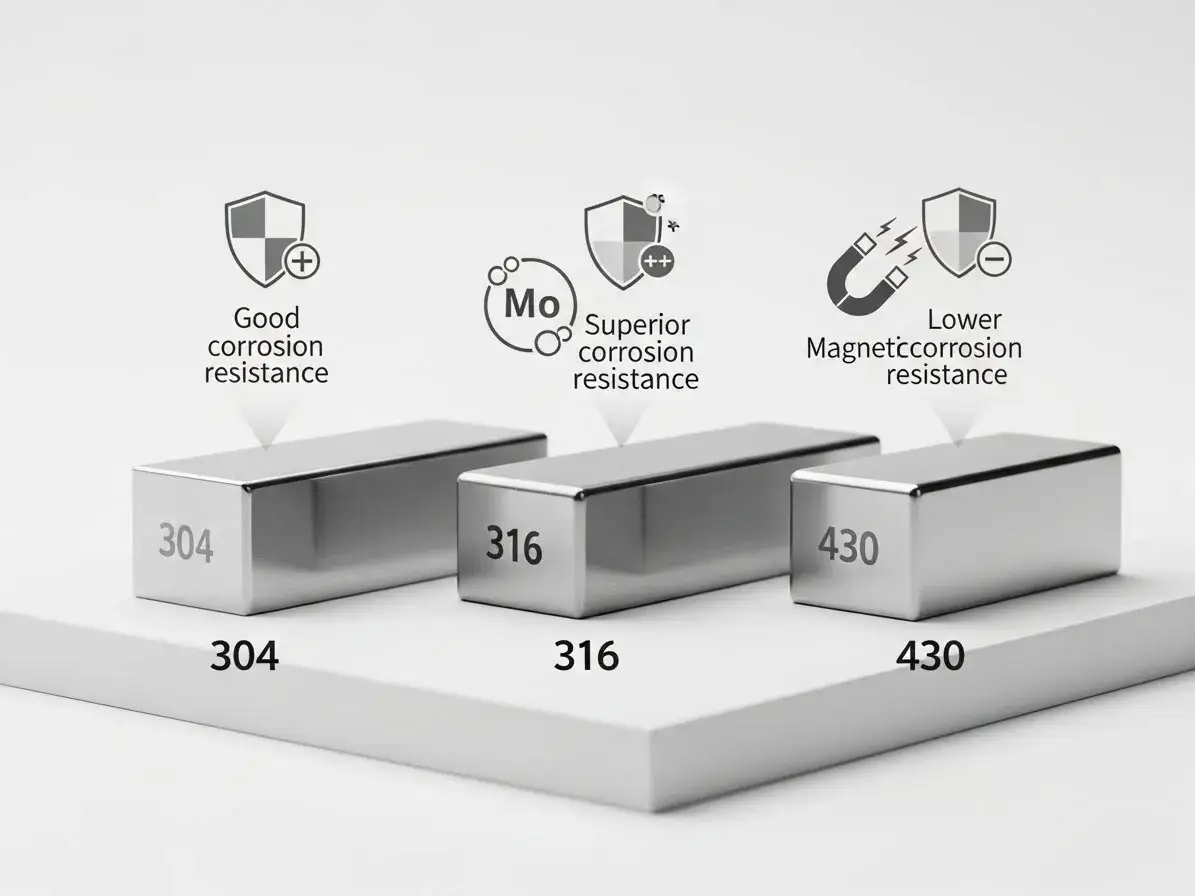
Comparison Table
| Property | 304 | 316 | 430 |
|---|---|---|---|
| Nickel | 8–10.5% | 10–14% | None |
| Molybdenum | None | 2–3% | None |
| Corrosion Res. | High | Very High (especially chlorides) | Moderate |
| Magnetic | No | No | Yes |
| Price | Moderate | Higher | Lower |
Use 316 for marine and salt-rich environments. Use 430 only when price matters more than durability.
What Is the Global Market Size and Demand for 304 Stainless Steel?
Looking to source stainless steel? Market trends can affect your cost and availability.
The 304 stainless steel market reached $21.6B in 20234 and is projected to hit $32.5B by 2031, growing at 4.2% CAGR.

Industry Demand Snapshot
- Top industries: Construction, food, automotive
- Top regions: Asia-Pacific, North America, Europe
- Growth drivers: Urbanization, hygiene demand, infrastructure upgrades
- B2B trends: OEM/ODM customization is increasing
At Sibottle, we're seeing more clients request bulk OEM bottles in 304 stainless steel due to this global shift toward quality and sustainability.
The global stainless steel market5 continues to expand, with the 300 series segment6 holding the largest market share due to its superior corrosion resistance and versatility.
What Are the Main Advantages and Disadvantages of 304 Stainless Steel?
Is it always the right choice? Not necessarily.
Advantages include corrosion resistance, strength, and formability; disadvantages include poor machining and no heat-hardening.
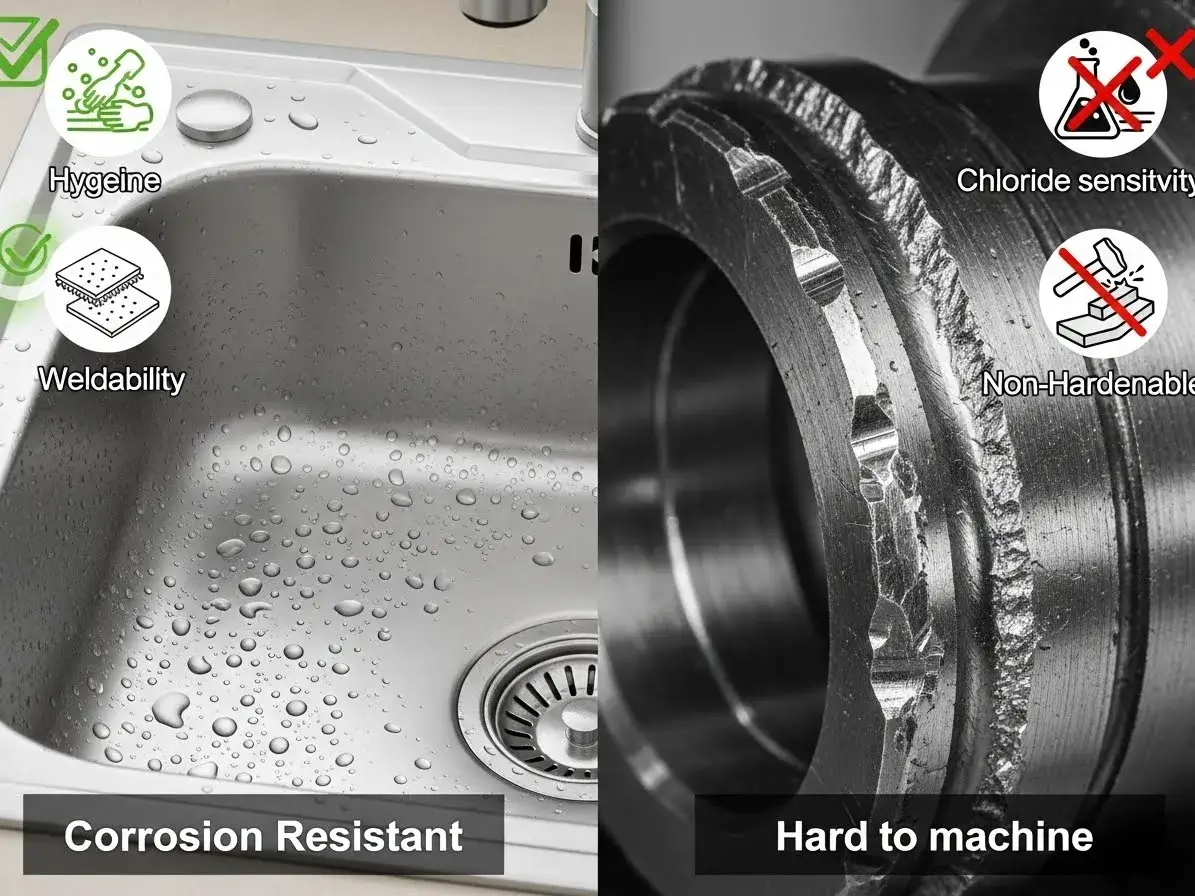
Pros
- Resists rust and chemicals
- Easy to fabricate and weld
- Aesthetic surface finishes
- FDA approved7 and hygienic
Cons
- Not hardenable by heat
- May suffer pitting in chloride-rich areas
- Harder to machine than carbon steels
Choose based on needs. If you want formability and hygiene, go with 304. If exposed to seawater, consider 316 instead.
How Do You Maintain and Recycle 304 Stainless Steel?
Over time, even stainless steel can lose its shine without care.
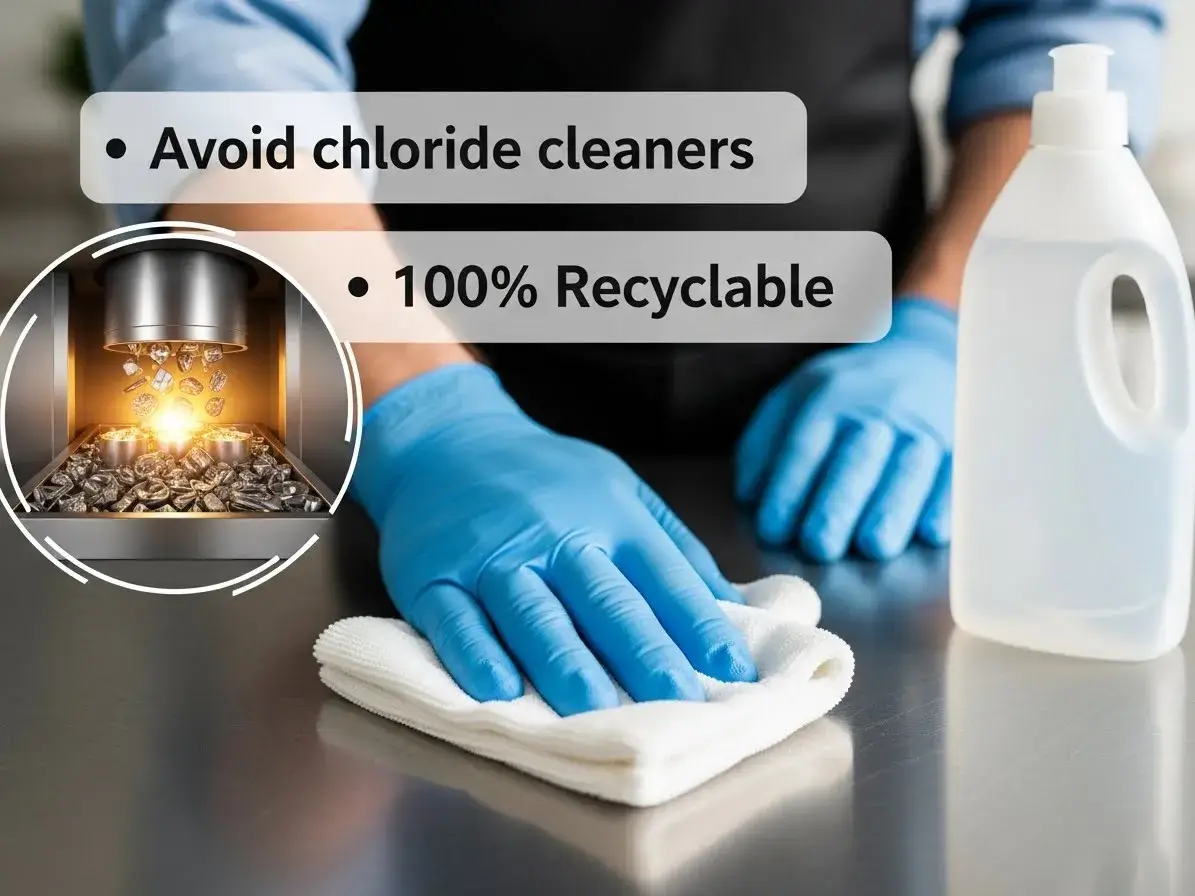
304 stainless steel is easy to maintain, rust-resistant, and fully recyclable, making it a sustainable choice.
Maintenance Tips
- Clean regularly using mild detergent
- Avoid chloride cleaners (they cause pitting)
- Dry thoroughly after washing
- Polish with non-abrasive pads
- Inspect welds for discoloration or cracks
Sustainability Facts
"304 stainless steel is 100% recyclable without quality loss8." — World Steel Association
This makes it ideal for reusable products like tumblers or custom-branded water bottles. At Sibottle, we help clients turn eco goals into real, lasting products.
Conclusion
304 stainless steel offers excellent corrosion resistance, strength, and versatility, making it ideal across industries with sustainable and practical benefits.
Footnotes
-
Wikipedia provides a comprehensive technical explanation of austenitic stainless steel, detailing its face-centered cubic crystalline structure, non-magnetic properties, and how nickel and chromium additions create this stable alloy family. ↩
-
Wikipedia's SAE 304 stainless steel article explains the origins of the 18/8 designation (18% chromium, 8% nickel), the material's history dating back to 1924, and its various international designations and standards. ↩
-
Wikipedia's marine grade stainless steel article explains how the 2-3% molybdenum content in 316 stainless steel provides superior resistance to chloride-induced pitting and crevice corrosion in saltwater environments. ↩
-
Verified Market Research provides industry analysis showing the 304 stainless steel market was valued at $21.6 billion in 2023, with projections to reach $32.5 billion by 2031 at a 4.2% compound annual growth rate. ↩
-
Grand View Research provides comprehensive market analysis showing the global stainless steel market was estimated at $117.63 billion in 2023, projected to reach $197.29 billion by 2030 at a 6.7% CAGR. ↩
-
Fortune Business Insights details how the 300 series stainless steel segment dominates the market with grades like 304 and 316 extensively used in food processing, medical devices, and chemical equipment applications. ↩
-
Skolnik Industries explains FDA food contact requirements, confirming that 304 stainless steel meets the minimum 16% chromium content required for food-safe materials under FDA, ANSI, and NSF standards. ↩
-
World Steel Association confirms that steel is 100% recyclable without any loss of quality, with over 25 billion tonnes recycled worldwide since 1900, making it one of the most sustainable industrial materials available. ↩